
The People’s History: In the midst of assault & trauma, protester Denver Foote helps others
EXCLUSIVE: New article series from Just Voices. Denver Foote still carries the pain of their arrest and uses it to help others.
Editor’s Note: Protests held in the wake of George Floyd’s murder changed the world. This must-read series about the protests in Des Moines is researched and written by Just Voices, which is part of a movement to end racial profiling by the police. The series appears exclusively in Black Iowa News. (The views and opinions expressed in this series are solely the authors and do not necessarily reflect the views of Black Iowa News.)
(NOTE: Foote uses the pronouns they/them/their).
Denver Foote was trying to leave a protest against racial injustice when they said they were violently attacked by Des Moines police wearing riot gear, lobbing cans of tear gas, and swinging batons. Police had kettled Foote and several others in an alley. There was no way out. It was May 25, 2020.

Just one year prior to the 2020 protests against racial injustice, Foote age 24, moved from Clear Lake, Iowa, to Des Moines. Because of severe poverty, racial discrimination, alcoholic parents, and racial profiling that they witnessed growing up, moving to Des Moines to live with their aunt and attend beauty school felt reminiscent of their grandparents, who had immigrated from Mexico and the Philippines. “They were looking for something better. And I had a lot of high hopes moving to Des Moines,” said Foote.
Growing Up Poor and Racially Different in a Small Town in Iowa
“Our family was part of a handful of families of color [in Clear Lake],” said Foote. “My house was, like, probably one of the worst houses in the town. The ceilings were falling in. I definitely grew up in a working-poor family.
“I grew up witnessing my father be stopped by police for pretextual [reasons]. So, I kind of already grew up with the thought that public safety that’s in America isn’t actually keeping people safe.”
While growing up, Foote worked as a waitress and a gas station attendant. The racism Foote faced included, but was not limited, to customers “refusing to let me serve them or touch their money.”
By the age of 18, Foote was on their own. It was the year 2014 and their mother had died of sclerosis of the liver due to chronic alcohol use; their father had moved to Virginia.
“I had to figure everything out on my own. I had to juggle multiple jobs. I had to stay in this conservative white community where I didn’t feel like I belonged, because I couldn’t afford to leave it,” Foote said.
Then, in 2019, their aunt purchased a house in Des Moines and invited Foote to stay in a spare bedroom, rent free, until they completed beauty school—a life-long dream of Foote’s.
“It’s only because of my aunt that I got out of that cycle of just being, working and living and trying to deal [alone] with the racism that I was facing in Clear Lake.”
After Moving to Des Moines
Foote knew they would not get entirely away from racism when moved to Des Moines, but they knew Des Moines to be more diverse and have more employment and social opportunities.
Once living in Des Moines, and when not going to school, Foote got involved with groups that were working for social equity.
Foote said: “I was very involved with Bernie Sanders’ [presidential] campaign, I’d finished beauty school, and I was ready to go back to work full time and start my dream career.” They had been looking for a full-time position for only one month when “everything shut down” due to COVID-19.
Two months later, on May 25, along with most of the country, Foote watched George Floyd, an African American, be murdered by Minneapolis police. The televised footage came from the smartphones of public witnesses who had pleaded with police to stop. While the world watched Minneapolis take to the streets in protest, Iowans also began protests in their communities. People who had experienced racial injustices and knew of other deaths at the hands of the police could no longer just watch alone in their homes. They needed community.
When asked why they had joined demonstrations in Des Moines, Foote said, “When George Floyd was murdered by the police, and I saw the movement and people taking to the streets in Minnesota, I felt, like, just like a wave come over me, like my experiences were not singular.” They no longer felt alone with their experiences of racism and wanted to grieve together with their community.
Joining the Movement in Des Moines
“So, I went to the first big protest that happened. I think it was in front of City Hall or maybe the Des Moines Police Department, and there were people who were speaking and sharing their stories. And that, like, that moved me. That was when I really found out that your personal stories are strength, and you can find power in those,” Foote said. “They made me feel like I was not alone. I felt like I was a part of something bigger than myself.”
The second action in which Foote participated was a march held on May 25, 2020. It was prior to the formation of the Des Moines Black Liberation Movement, “It was just people getting together and kind of like grieving together,” Foote said.
When Foote and their friends arrived, the march was underway, and the Capitol was blocked off by a barricade and police in riot gear.
“We were marching through the East Village and going to the Capitol, and we would run into lines of police officers. And I remember witnessing, like, these vans pulling up and cops just coming out and rushing at people that were behind the march, like trailing. But there were a lot of people there. So, we ended up at the Capitol, and we had already witnessed a police officer trying to drive through the march. So, people were grieving, and they were mad,” said Foote.
Once at the Capitol, Foote and their friends decided to join the majority of the marchers who were turning back at the blockade and marching back through the East Village.
“At that point, I was extremely scared, and I was telling my partner that I wanted to leave,” said Foote. When the March got to where their car was parked, Foote and their boyfriend separated from friends and drove home.
The Assault
But once home, Foote and their boyfriend, Jake Grobe, became concerned for a friend they left behind, Foote said.
Foote said, “So my friend that I went with was still there and she wasn’t answering her phone. I couldn’t get a hold of her. I saw the lies happening on Facebook, and I was terrified, honestly, and I didn’t want her to get hurt or injured. So, we ended up going back to find her.”
Once back in the East Village, Foote parked near the police station and the Court Avenue Bridge. Shortly, after walking west on Court Avenue, they found their friend, Miranda. Foote wanted to head back to their car immediately, but Miranda and Jake wanted to stay with the other protesters.
Said Foote, “And then everyone started moving down Court Avenue, and she and my boyfriend were like — We got to stick with people, and I remember them being, like, we need to see what happens. And I was like — No, I want to leave. And, mind you, I’m with two white people, so they don’t have the experiences or the history that I have.”
Foote didn’t want to walk back to the car alone, so they briefly continued west with their friends. But soon, a few protesters began breaking windows at businesses along Court Avenue, and Foote knew they had to leave. Foote told their friends, “Y’all can stay here. I’m going to leave. Like, I’m gonna risk it and just walk; go to my car by myself and go home. Like, if you want to stick around, that’s your thing. I was worried, and I made sure you’re safe.”
Foote walked approximately five yards east on Court Avenue and turned south down an alley when police began kettling people walking into the alley. From both ends of the alley, police were pushing the crowd with their large shields, toward the middle of the alleyway. Foote feared for their life.
Said Foote, “I just saw a line of riot police just coming down. And I remember running into the mix that they pushed me into. It was like fight or flight. I decided flight. I got into a nook, and then I was like—this isn’t a way out, this isn’t safe; I shouldn’t be here. Like they’re gonna see me and be like — this person’s just gonna jump out and get me or something. So, I took a step out, and that’s when I was maced the first time by a police officer.”
Foote, in extreme pain and temporarily blinded by mace, stood frozen and resigned to being arrested. Additional officers approached them. One pushed them back into the nook with his shield, Foote said.
“I remember yelling, “Stop!” to, like, draw attention to myself, to draw attention to what was happening,” Foote said.
But the officers pushed them again and again, macing them two more times. As the officers began shouting something about not being able to handle Foote and that Foote was fighting them, the 4’11’’ and 98 lb. Foote began crying and chanting, “I’m not resisting! I’m not resisting!”
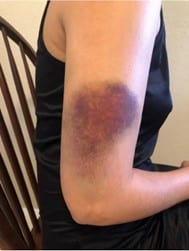
Foote said, “They ended up hitting me with their batons on my leg, on my hip, and on my arm. It was through the baton hittings that I fell to the ground. My glasses fell off. Then he knelt into my back, and they broke—they shattered my glasses. It’s kind of like I remember that stuff happening, but most of the time I was just bawling and terrified.”
After being cuffed and taken to a paddy wagon, Foote tried to reason with police. “I remember I was crying, and I told them, “I’m just here because I’m grieving and, like, my community’s grieving.””
But the officers just dismissed Foote, saying something to the effect of “Well, if you didn’t want to get beaten you shouldn’t have come out here protesting.”
Helping Others While Jailed
Foote spent the rest of that night — two more nights and three days in Polk County jail with mace in their clothing, hair and no glasses. Grobe accepted and paid for calls from Foote and worked on raising their bail. In the meantime, Foote focused on the pain of others. Foote worked to bail out those who had been arrested at the protest that night and at a protest the evening before.
Foote said, “Even though I went through this immense trauma, I tried to help protect the other people that were there and were crying.” Foote listened to their stories and, from a phone in their holding cell, began organizing bail for the others.
“I just remember calling my boyfriend. I’m like, “There’s some here that think they’re gonna be here until their trial because they can’t afford a $50 bail.”
Using their Venmo debit card, they provided bail funds for ten people.
Foote noted that Des Moines Mutual Aid provided a lot of support for her and others after the protests. “They would stay outside [the jail] and like help people as they were being released.”
The Trauma Afterwards
“It wasn’t until I went into lockdown and was in my own cell that I kind of started breaking down,” Foote said.
Eventually, Foote was charged with two felonies and released awaiting pretrial. They had to report to a probation officer once a week and was on house arrest for three months, until, thanks to their lawyer, all charges, including the felonies were dismissed by court order.
“But, it really didn’t matter, because when I was released, it was all starting to, like, hit me. And I remember the day after I got released, I was just sitting on the couch, and I started breaking down crying,” said Foote. “My boyfriend was like, “Are you OK?” And I’m like, “No. What they did to me wasn’t OK.” And that’s like when it kind of hit me. So I didn’t even really want to leave my house anyway.”
Through Iowa CCI, Citizens for Community Improvement, Foote was connected to a counselor. However, Foote continues to suffer from PTSD and is careful about where they go in public and how they get there.
Foote fears they will come across police when out in public. When they see the police, Foote has panic attacks. They once had an anxiety attack while driving as a result of seeing a police car. And then there is the physical damage. “I have permanent nerve damage from them hitting me. So like my right thigh is still very tender, and my leg, if I use it too much, like it hurts all day, you know. And sometimes, it just flares up… And I just think about the police officers that did this to me, who feel no remorse.”
Foote read the incident reports filed by the police. “They said they were defending themselves. They said that they couldn’t control me. They blamed it on me wearing all black,” said Foote.
Finding Healing in Community
After a year of focusing on recovery and despite continued mental and physical pain, Foote again became an active volunteer for nonprofits that help people who are poor and people of color.
Des Moines Mutual Aid provided support after their release from jail, and Foote returned the favor by becoming a volunteer for them. Foote met a lot of people while volunteering and was able to start up a grassroots organization with their new friends.
The organization is called Des Moines People’s Town Hall. It provides a newsletter and resources to assist people who want to communicate their concerns and opinions with city officials and/or who want to obtain city documents through the Freedom of Information Act.
The People’s Town Hall provided support that helped pass the 24/7 Carbon-free Resolution at a City Council Meeting. And, the organization is a co-sponsor of the petition to rename George Flagg Parkway. Flagg was a long-time member of the Des Moines City Council known for his racist decisions.
Earlier this year, Foote announced their run for Mayor of Des Moines.
“It wasn’t really until the statewide election and Republicans taking control [of the Iowa Legislature] that I knew that we had to do something to protect ourselves locally. We needed to create a safe haven within Des Moines for our most oppressed people. Because there are things that we can do locally. And a lot of people are like—Well, why mayor? Why not a smaller seat? And I feel a huge urgency to help people. I feel we cannot wait another four years. The catastrophe is already happening. The police force already [receives] 40% of the [city] budget, and our houseless community continues to grow every day,” said Foote
On February 7, 2023, as a part of a series of mayoral candidate interviews by Iowa Local 5 News, Foote was interviewed. When asked about their assault by police, they said, “After being attacked by two police officers, with their batons, I went through a lot of emotional distress. It was really hard for me to get through that. I needed to find something within my experience that would give me strength and not allow the experience to [cripple] me . . . Some people are not able to speak up. But I have found power in the stories of others that show me that my experiences are not singular. Hearing the stories of others has empowered me to speak up for those who cannot.”
Editor’s Note: Denver Foote is a candidate for mayor of Des Moines. They are also engaged in a lawsuit against the Des Moines police department stemming from the protest.
Related Articles
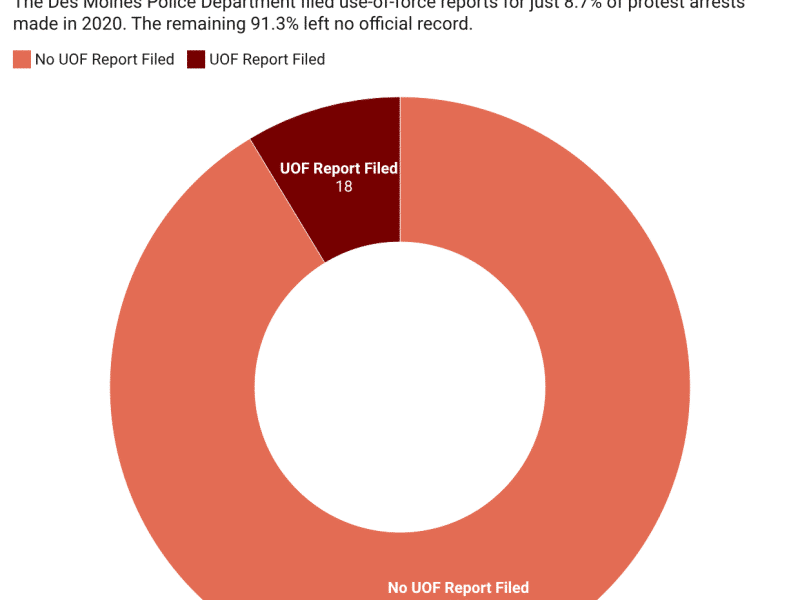
What the Numbers Caught: A Night of Force Tells All about the DMPD
ANALYSIS: Iowa nonprofit Just Voices releases study of Des Moines Police’ Use-of-Force Reports from the George Floyd protests.
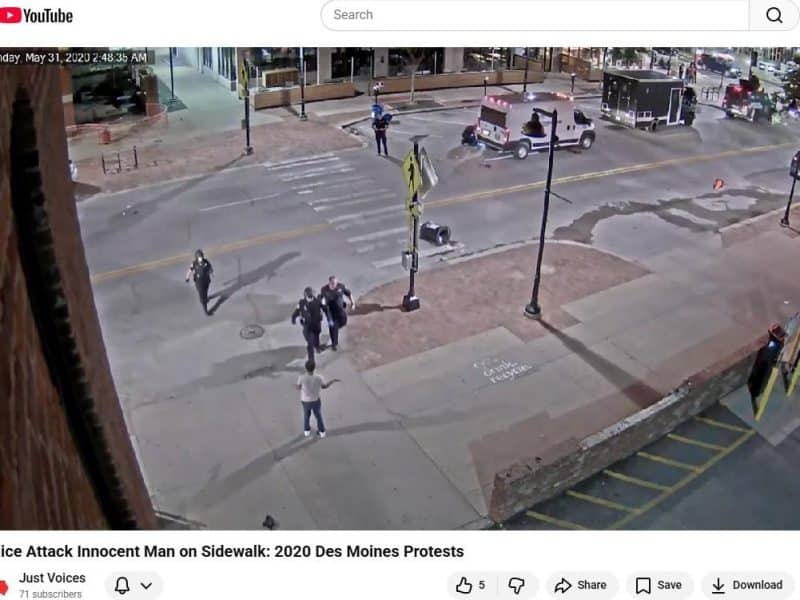
Profile of Des Moines police violence in aftermath of 2020 George Floyd protests
Officers caught on camera: Just Voices dives into video of Des Moines police officers assaulting a pedestrian on May 31, 2020 – a week after George Floyd’s murder.
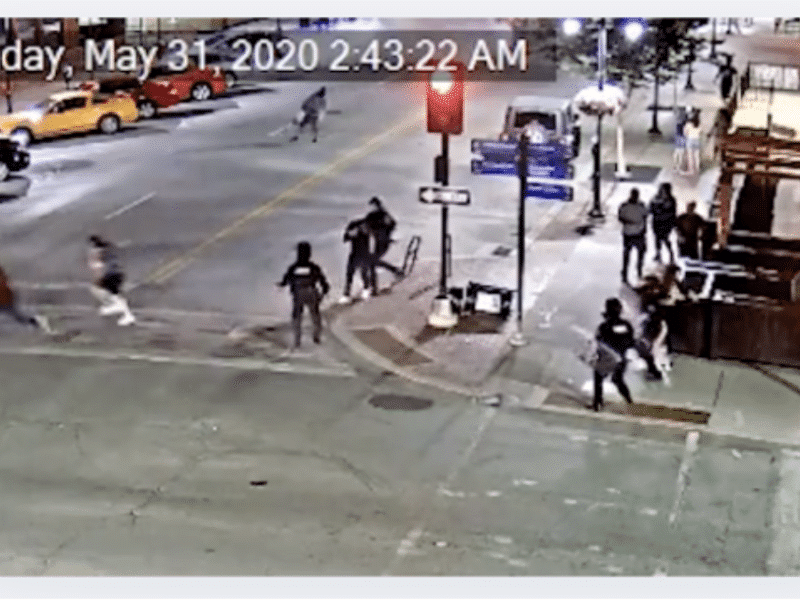
The Silence After the Sirens: What a Security Camera Revealed at 3rd & Court
A nonprofit dissected a surveillance video from the 2020 George Floyd protests, revealing allegedly undocumented use-of-force incidents by the DMPD.