
A seat at the table: Iowa NAACP Day on the Hill pushes advocacy, sounds alarm on multiple bills
Iowa NAACP leaders traveled to the Iowa Capitol on March 12, to advocate, train and push for change with state lawmakers.
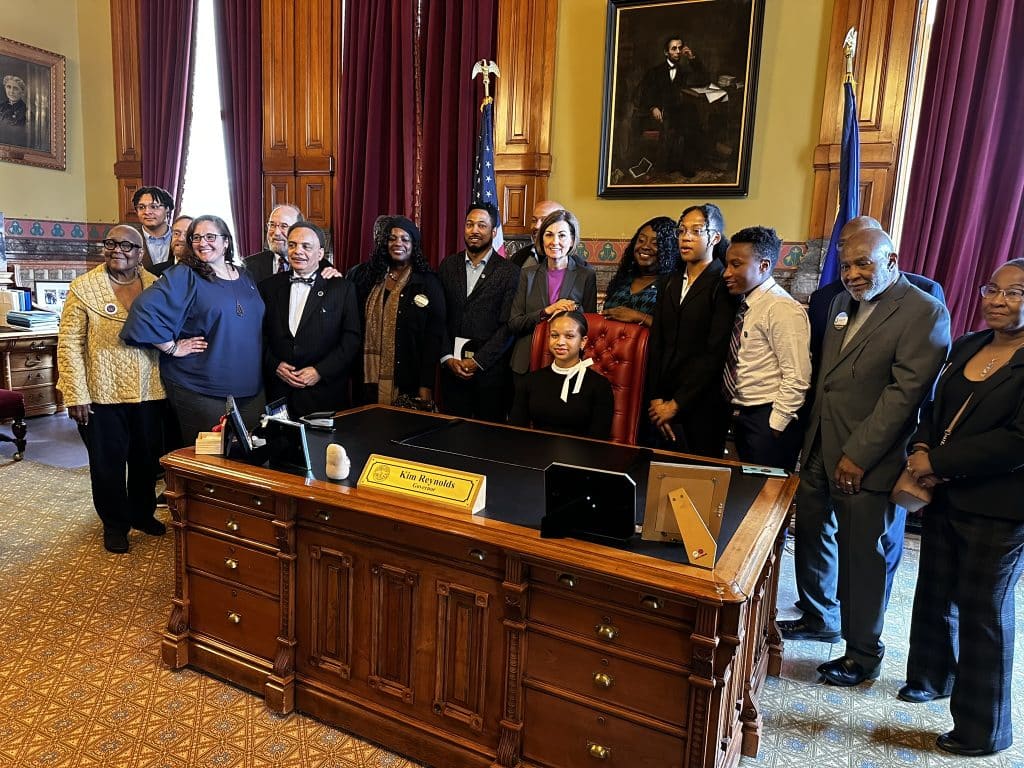
Bradlee Gross, 16, a junior at Des Moines’ Roosevelt High School, sat confidently in Gov. Kim Reynold’s office. At the Republican governor’s desk. In her red chair.
“When I sat in the governor’s chair, I felt empowered, especially as a young African American teen,” Gross said. “I felt as though positions such as governor and higher were obtainable. It gave me hope for the future that I could be whatever I wanted to be.”
NAACP leaders from Des Moines, Cedar Rapids, Fort Dodge and Davenport — and Gross and youth leaders from the Des Moines Chapter of Jack and Jill of America — converged at the Iowa Capitol for the NAACP’s lobbying day.
Betty Andrews, president of the Iowa-Nebraska NAACP State Area Conference of Branches, led the event, which about 20 people attended. Andrews, recently elected to the NAACP national board of directors, emphasized the organization’s priorities and concerns amid looming legislative deadlines.

“These are the bills that we felt are really important to lift up . . . and are in alignment with our consistent work with government officials,” she said.
Bills the Iowa NAACP supports:
- HF2587 — Juror compensation
- HF 2372 — Minority impact statements regarding juveniles
- HF349 — Probation incentives (REFORM Alliance)
Bills the Iowa NAACP opposes:
- Board/commission reorganization, which includes eliminating the Iowa Commission on the Status of African Americans (and others) — SF2385
- Social studies curriculum — HF2544
- Eliminating citizen review boards — SF2325
- Voting — SF2380, HF2610
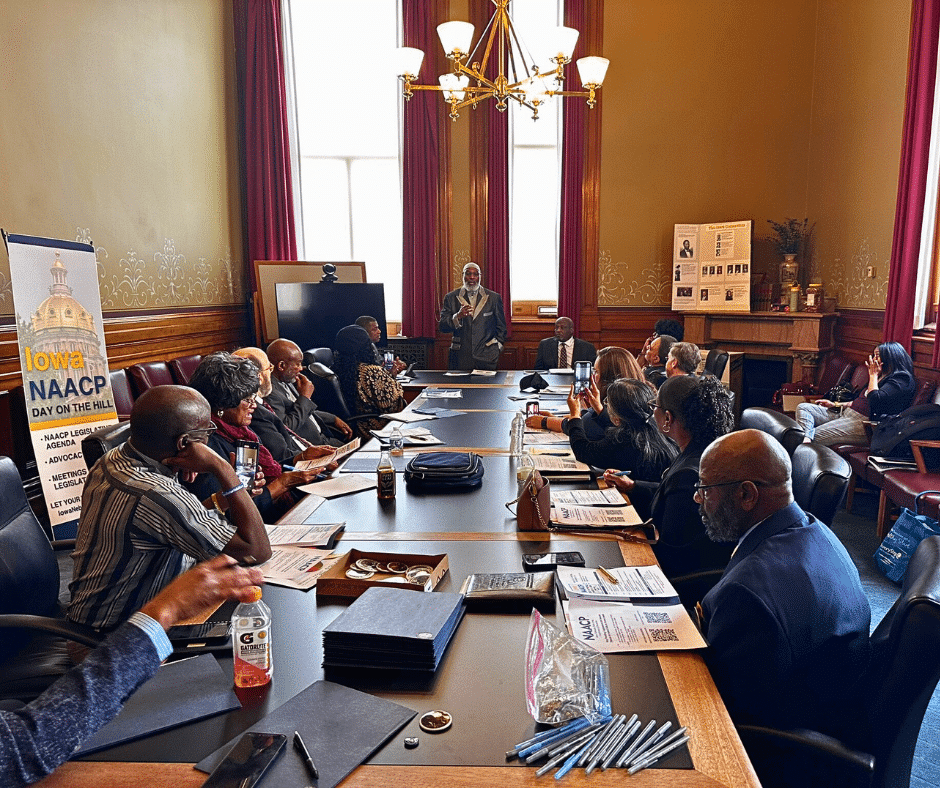
During the four-hour event, the group met with legislators, discussed bills in depth, learned about lobbying, saw their representatives and met with the governor.
State Rep. Ako Abdul-Samad and Sen. Izaah Knox hosted the group’s attendance. Five Black legislators, Abdul-Samad, Eddie Andrews, Jerome Amos Jr., Ross Wilburn and Mary Madison, spoke to the group.
Abdul-Samad, 72, is the longest-serving Black legislator and will retire at the end of the session. Having served for 18 years, he said people must fight “for or against” bills and interact with their legislators, but it does not happen often enough.
“When you look up in the gallery, it’s disheartening. We don’t see people,” he said.
Amos, 69, of Waterloo, said he’ll likely run for one more term. He stressed the importance of voting — especially for young people.
“It’s so important for them to get out and vote — to vote the way they feel it should be,” he said.
Madison said it’s essential for the public to become informed and build relationships with their legislators.
“We have to start looking at this as our house, our property,” she said.
Behind the scenes
Legislators discussed their behind-the-scenes work at the committee level. Amos is concerned about how legislators discussed citizen review boards, which review police conduct.
“I don’t think individuals understood what citizen review committees were,” he said. “And it’s about transparency and giving the citizens the opportunity to use their voice.”
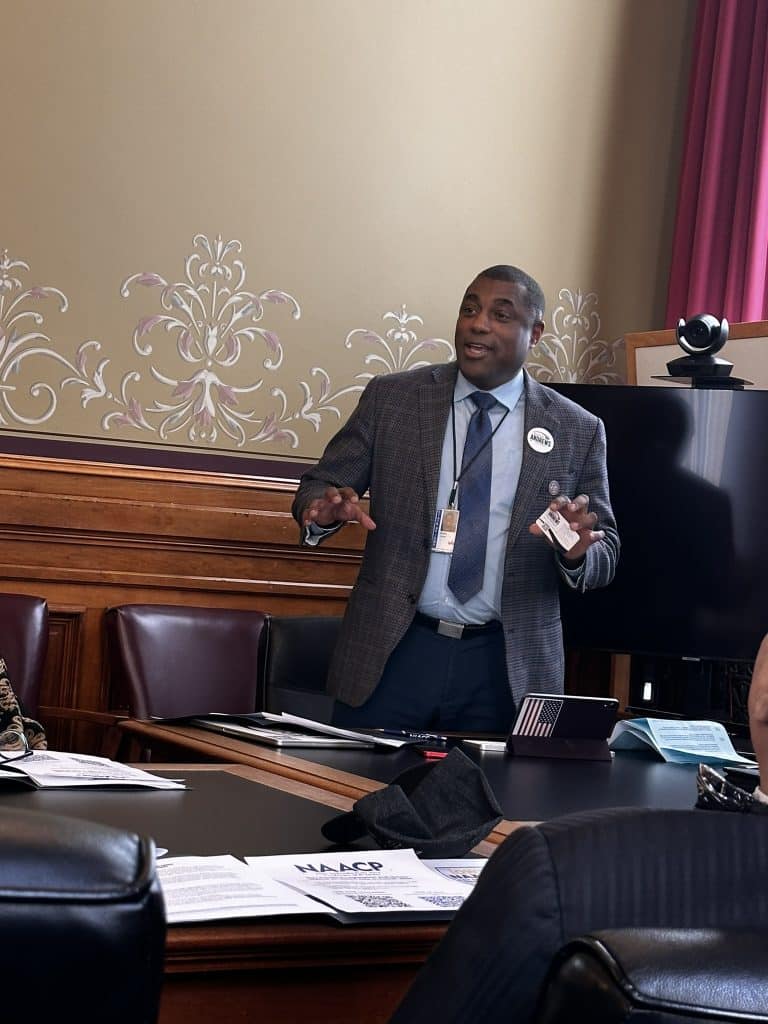
Andrews, who is married to Betty Andrews, said after he introduced the bill to raise the rates jurors receive, he was called to jury duty for the first time. Once legislators began discussing it, they began to see value in raising the rate, he said.
“This was very well-received the more we talked about it,” he said.
Wilburn said slowing down legislative processes and gaining more input is crucial and would allow lawmakers to glean insights before making decisions.
“Here’s what the bill does; Here’s the unforeseen consequence,” he said.
He advised participants to use storytelling with legislators.
“You’ve had an experience for or against, positive or negative — share that story,” he said. “That gets more attention.”
Kameron Middlebrooks, Iowa State organizer for REFORM Alliance, advised the group about HF349. Under the bill, Iowans on probation would earn credit for complying with their probation terms. They could also get their terms reduced or discharged for meeting certain milestones, such as academic achievement and longevity of employment.
“This is a credit incentive bill for people on probation,” he said.
He said the bill passed the Iowa House last year but didn’t get a vote on the floor of the Iowa Senate. He said they hope to accomplish the goal this legislative session.
Meeting with Gov. Kim Reynolds
Members piled into Reynolds’ formal office for 30 minutes to discuss the organization’s priorities.
“I’m really here to listen,” Reynolds said. “I appreciate the opportunity to meet with you.”
Andrews began the meeting by discussing the juror compensation bill, which would raise juror pay from $30 a day to $75 a day and the need to improve the lists of juror names.
“We, as the NAACP, appreciate this bill because it is in alignment with our goal to have diverse juries and how important having a diverse jury is to fairness and the process,” Andrews said.
She also advocated for Eddie Andrews’ bill requiring minority impact statements for bills about juveniles. Iowa was the first in the nation to implement minority impact statements to help reduce disproportionate incarceration rates, introduced by former State Rep. Wayne Ford and passed in 2008.
Middlebrooks, of the REFORM Alliance, told Reynolds about the probation bill.
“The goal with this is to get as many people off supervision as quickly as possible,” he said.
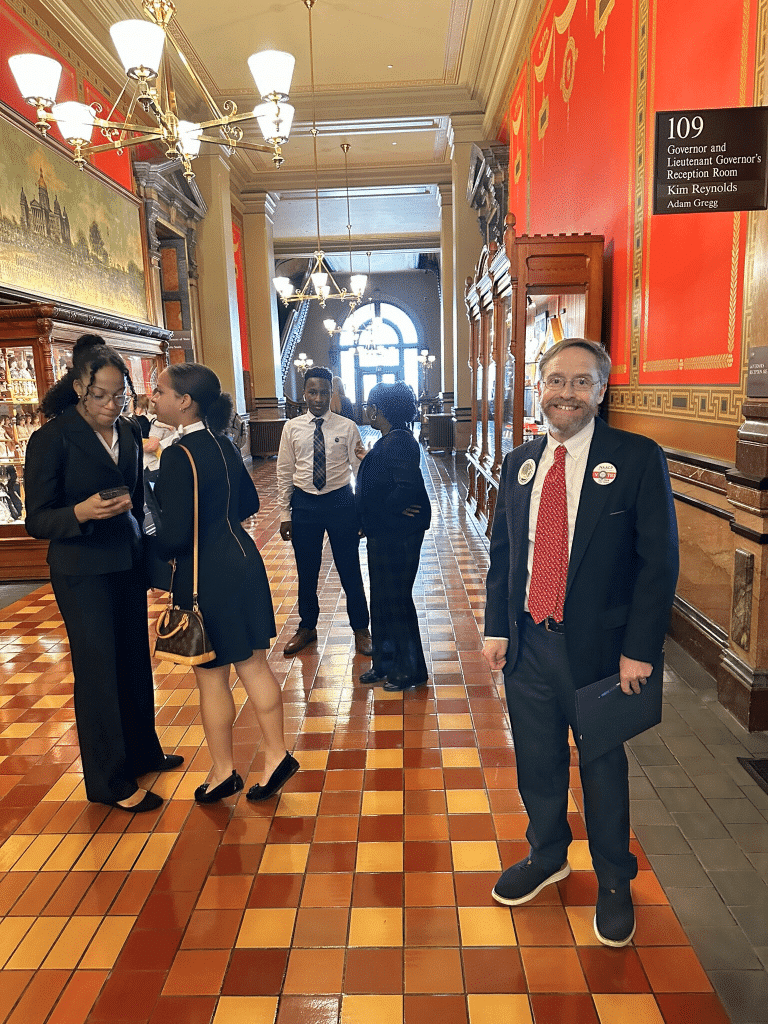
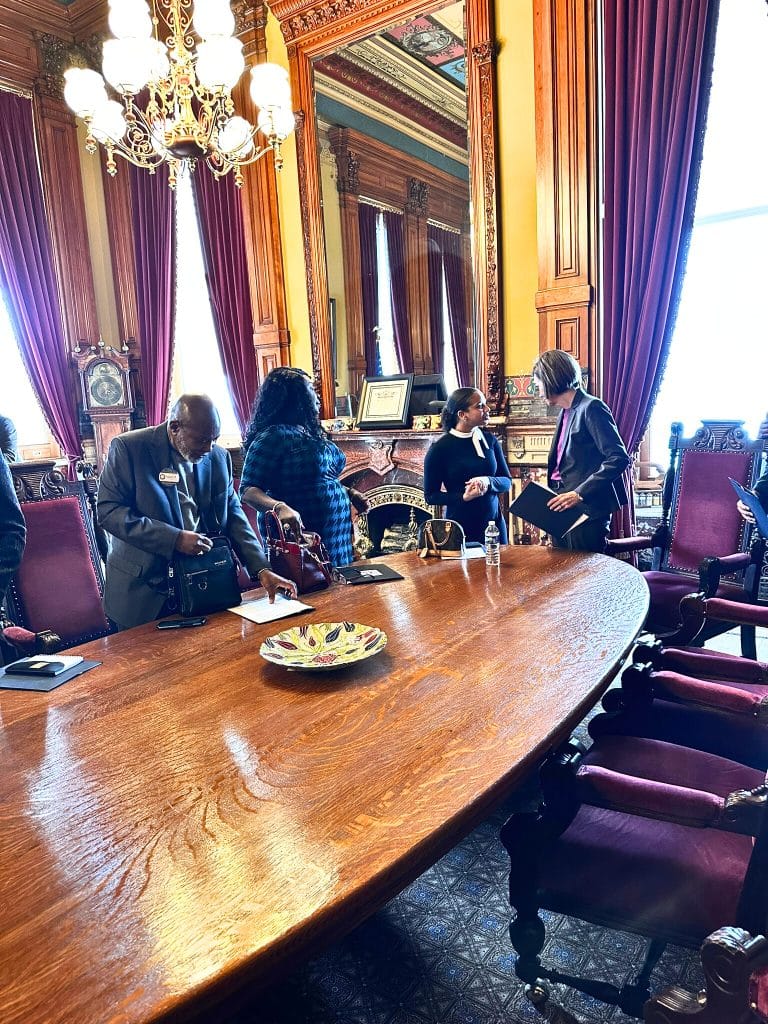

Political action Chair John Olsen and Andrews also discussed the proposed social studies curriculum bill. Andrews said the curriculum doesn’t include Jim Crow, “glosses over” slavery and doesn’t specify what led to the Civil War. She said many people of color have a fear of “being wiped out of history.”
“So we have a major concern about legislation like that,” she said.
Olsen also expressed concerns about voter verification numbers and vague language in the voter bill.
Andrews also told Reynolds that citizen review boards are “extremely important” and that the NAACP had been instrumental in helping establishing four of the five boards.
Andrews told Reynolds: “Those are the bills that we’re hopeful for.”
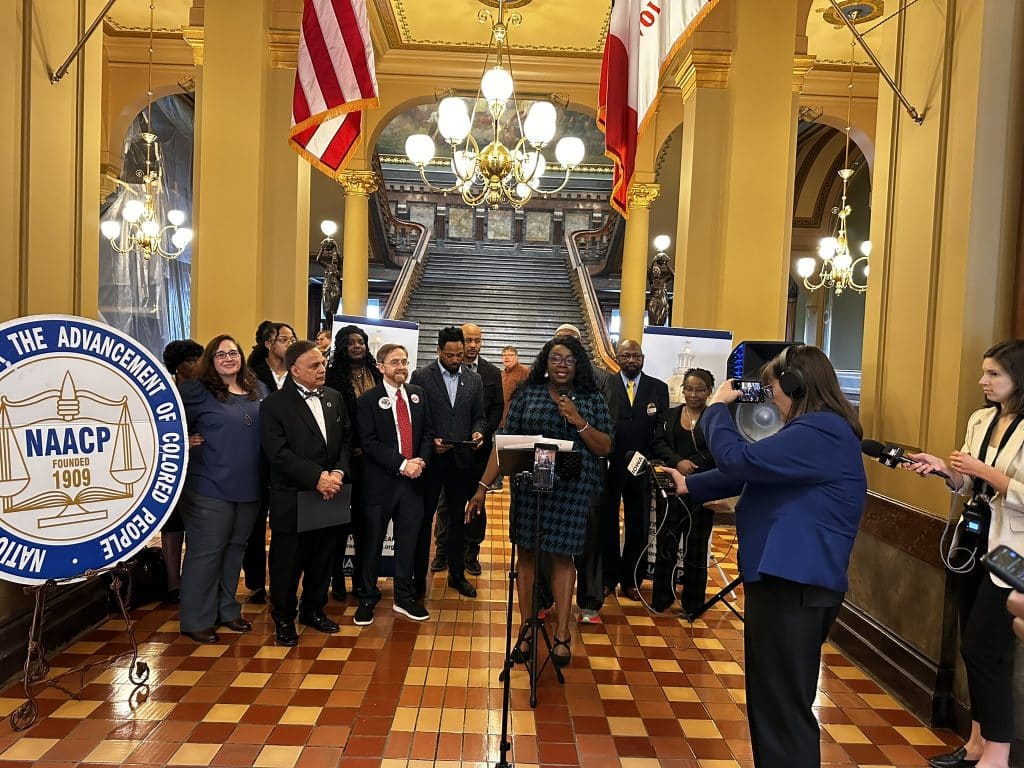
The event concluded with a brief press conference and ice cream social.
The NAACP was founded in 1909 and is the nation’s oldest civil rights organization.
Author

Related Articles

The Iowa America Thought It Knew: Race, Democracy and a Record Worth Remembering
Iowa has a rich history of Black Iowans making an impact on politics locally and nationally, says a former Iowa legislator
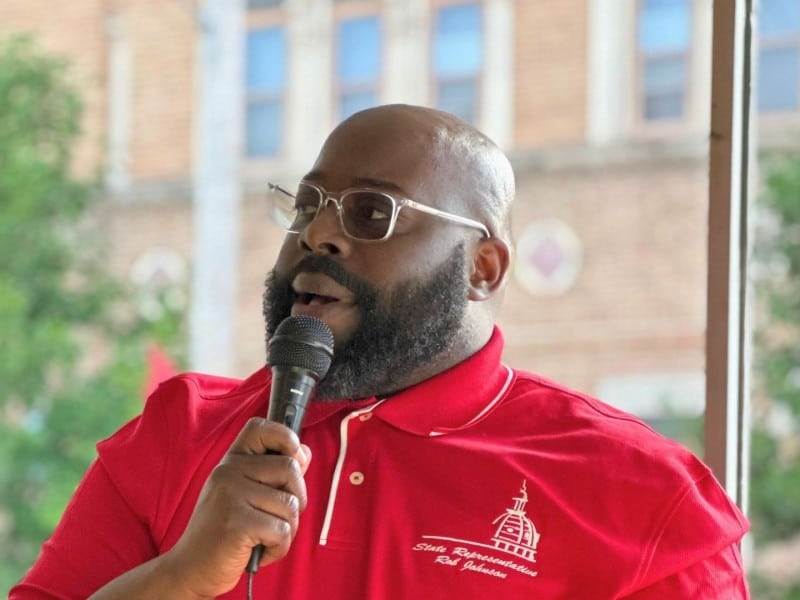
Unopposed Doesn’t Mean Unimportant: Rob Johnson Urges Community to Vote
State Rep. Rob Johnson (D-Des Moines) is running unopposed but wants all Iowa voters to turn out for the Nov. 3 general election.
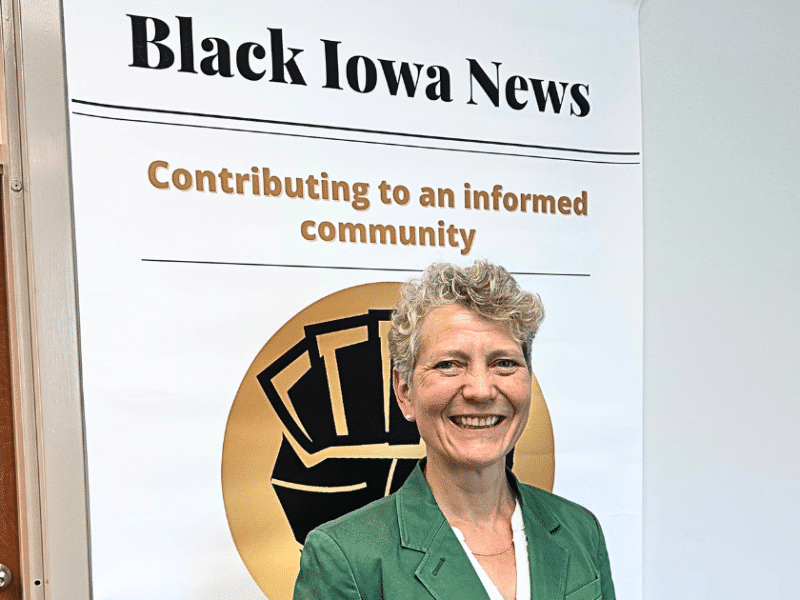
2028 Independent Presidential Candidate Diane Sare Has a Message for Black Voters: Look Beyond Democrats and Republicans
Diane Sare, an independent presidential candidate, decries the “billionaire perverts running things.” Says the U.S. needs a mission, as she laid out her plan during a campaign visit to Iowa.