
The Iowa America Thought It Knew: Race, Democracy and a Record Worth Remembering
Iowa has a rich history of Black Iowans making an impact on politics locally and nationally, says a former Iowa legislator
The Decision and the Question
The Democratic National Committee has made its decision for the opening window of the 2028 presidential nominating process. Iowa, the state whose caucuses helped define presidential politics for generations, is no longer in the Democratic early-state lineup.
I am not writing to relitigate that decision. The selected states deserve the opportunity to demonstrate what the new approach can accomplish. I am writing because the historical record matters.
Some of the discussion surrounding Iowa’s loss of its position raises a larger question as America enters its next 250 years: How much can we really know about a people’s capacity for racial progress, political participation and democratic leadership simply by looking at the racial composition of the place where they live?
This question is personal for me. The year 2026 marks my 50th year of civic engagement. My involvement began in 1976, America’s Bicentennial year, through Concerned Citizens for Minority Affairs. After our 1976 minority-focused presidential activity, I joined Jimmy Carter’s Iowa presidential campaign as its Iowa Minority Education Coordinator, a position recorded in official Iowa legislative historical materials. Carter later became the 39th President of the United States.
I later served 14 years in the Iowa Legislature and authored Iowa’s minority impact statement legislation. I have therefore watched this history from several seats: organizer, voter, campaign participant, legislator, forum co-founder, and witness to some of the history I now write about.
Representation and Participation Are Not the Same Thing
The Democratic Party’s stated objective deserves to be represented fairly. Its new early-state system is intended to expose candidates to a broader range of Americans important to the Democratic coalition, including substantially larger Black, Latino, Asian American, Native Hawaiian and Pacific Islander and Native American populations.
Broadening opportunity is a legitimate objective. But two concepts should not be confused.
Representation asks who is present. Participation asks who actually participates.
Putting millions more citizens from historically underrepresented groups inside early presidential states unquestionably expands the opportunity for representation. Whether that produces greater actual participation is an empirical question. We will have numbers. We can measure participation in the 2028 nomination process, and after November 2028 we can examine the larger national electorate as well.
The country already has historical benchmarks. After 2028, it will have new evidence. Let the evidence speak.
Barack Obama and the Iowa Test
On Jan. 3, 2008, Barack Obama walked into one of the whitest states in America and asked Iowa Democrats to believe that a Black man could become President of the United States. Iowa said yes.
Obama won the Iowa Democratic caucuses with 37.6 percent of state delegate equivalents, ahead of John Edwards and Hillary Clinton. Campaign veterans have long described Iowa as pivotal to Obama’s breakthrough. No historian can prove what would have happened in an alternative universe in which he lost Iowa. We do not need to. The importance that Obama’s own campaign placed on Iowa is part of the historical record.
Then something else happened. Obama did not simply win an Iowa Democratic caucus. In November 2008, Iowa voters gave him roughly 54 percent of their general-election vote. Four years later, after Iowans had watched America’s first Black president govern for an entire term, they voted for him again.
That second election matters. A predominantly white electorate had two opportunities to decide whether Barack Obama should be President of the United States. Iowa said yes twice.
That does not mean racism did not exist in Iowa. It did, and it does. It means something different: demography is not destiny.
National participation surrounding Obama’s elections matters too. Census-based analyses found Black turnout at historic levels in 2008 and 2012; roughly two million more Black Americans and two million more Latinos reported voting in 2008 than in 2004. Those figures do not prove that Iowa caused national minority participation. They do establish that overwhelmingly white Iowa at the beginning of the presidential process was not incompatible with historic Black participation nationally or with the election and reelection of America’s first Black president.
Jesse Jackson and the Heart of Greenfield
Long before Barack Obama tested whether a Black presidential candidate could win Iowa, Jesse Jackson tested another proposition.
During the run-up to the 1988 campaign, Jackson deliberately located his Iowa operation in Greenfield, a small, overwhelmingly white farming community in southwest Iowa, rather than in Des Moines. Contemporary reporting documented that decision and his effort to connect the economic struggles of farmers and workers with the struggles of Black urban communities.
I remember asking Jesse why he wanted to place his headquarters in a little Iowa town. His answer stayed with me: he wanted to connect with farmers and demonstrate that he understood where they were coming from. Contemporary reporting corroborates the substance of that memory. In Greenfield, Jackson said, “If you can capture the heart of Greenfield, you can capture the heart of America.”
The Washington Post described Greenfield as conservative, Republican and entirely white, yet reported that Jackson built an unusual relationship with the community, returned repeatedly and established his statewide headquarters there. His campaign emphasized a common ground of economic progress across racial and geographic lines.
Jackson did not win Iowa. That is not what makes the story important. A Black civil-rights leader from Chicago went into small-town white farm country and essentially said: ‘Your economic pain and the economic pain of people where I come from do not have to be strangers to each other.'”
And people listened.
That was Iowa, too.
An Iowa Arena Open to Barrier-Breaking Candidates
Jackson’s experience belongs to a larger presidential pattern. Iowa did not guarantee victory to candidates who broke racial, gender, ethnic or sexual-orientation barriers. It did something more basic but still important: it gave them an arena in which to compete, organize and be heard.
New Mexico Governor Bill Richardson, a Latino presidential candidate and former United Nations ambassador and U.S. Secretary of Energy, competed in Iowa in 2008 and finished fourth in the Democratic caucuses. Hillary Clinton narrowly won the 2016 Iowa Democratic caucuses, becoming the first woman to win them. In 2020, Pete Buttigieg, an openly gay presidential candidate, received the highest state-delegate-equivalent total in Iowa’s Democratic caucus count; because of reporting and tabulation problems, the Associated Press declined to declare an overall winner.
They did not all win Iowa. That is not the point.
They came. They organized. Iowans listened. Some succeeded beyond expectations. Some did not.
The opportunity to compete existed.
That should count for something when history evaluates whether a predominantly white state was capable of engaging an increasingly diverse America.
Iowa’s Story Did Not Begin With Presidential Caucuses
Iowa’s racial history did not begin with Barack Obama, Jesse Jackson, presidential caucuses or me. It reaches back almost two centuries.
In 1839, before Iowa was a state, the Supreme Court of the Territory of Iowa decided the case of Ralph, a Black man who had previously been enslaved in Missouri. When an effort was made to seize him and return him to slavery, the territorial court ordered him released. The decision preceded the United States Supreme Court’s infamous Dred Scott ruling by 18 years.
During the Civil War, Iowa sent an extraordinary share of its population into Union service. Historical Iowa educational sources report that roughly half of eligible males ages 15 to 40 served – the highest percentage of any state, North or South – and more than 70,000 Iowans served the Union cause.
In 1868, the Iowa Supreme Court ruled for Susan Clark, a Black schoolgirl from Muscatine who had been denied admission to the public school serving her neighborhood. Iowa rejected school segregation 86 years before Brown v. Board of Education. That same era saw Iowa remove racial restrictions on Black male suffrage before the Fifteenth Amendment established national constitutional protection against racial discrimination in voting.
In 1873, Emma Coger successfully challenged racial discrimination aboard a Mississippi River steamboat, and the Iowa Supreme Court upheld her rights.
These decisions did not eliminate racism. Progress and prejudice existed in the same state at the same time. That contradiction is not uniquely Iowa. That contradiction is America.
Fort Des Moines: Who Would Accept the Mission?
During World War I, Black Americans demanded the opportunity not simply to fight for their country but to become officers in the United States Army.
Fort Des Moines became the nation’s first training camp specifically for Black Army officers. National Park Service materials document that about 1,250 men entered the program and 639 received commissions.
The choice of Iowa is itself part of the story. Iowa PBS preserves the account of Des Moines attorney and military historian William Morris, who explained that Fort Des Moines was selected because “no other state in the Union would accept such a facility.”
The Wilson administration faced resistance to creating a Black officer-training camp, yet Iowa ultimately became the site of the training.
Among those associated with the camp was Charles Hamilton Houston, who would become one of the great legal architects of the attack on American segregation.
Again, the point is not that Iowa was free of racism. Black officers themselves encountered discrimination. The point is that when the nation needed a place for this historic experiment, Iowa became that place.
Black Lawyers, Edna Griffin and Iowa’s Civil-Rights Record
In the 1920s, Black attorneys confronting exclusion within America’s legal profession organized what became the National Bar Association in Des Moines. The association’s centennial history traces its origins to Black legal pioneers who met in Des Moines in 1924 and incorporated the following year.
Then came Edna Griffin.
In 1948 – seven years before Rosa Parks’ historic stand in Montgomery – Edna Griffin and others were denied service at Katz Drug Store in downtown Des Moines. Griffin organized, protested and went to court. Her campaign helped force change in public accommodations.
Years later, this history became personal for me. As part of a major event honoring Edna Griffin, I helped arrange a telephone conversation between Griffin and Rosa Parks. President Bill Clinton sent a letter recognizing the occasion and Griffin’s contributions.
What follows is my firsthand recollection, not a quotation from an archival transcript. I remember Rosa Parks telling Edna, in substance, that Edna had shown extraordinary courage by challenging racial discrimination as a Black woman in a smaller Midwestern community without the numbers or organized movement that later surrounded Montgomery. I have never forgotten that conversation.
Sometimes being a small minority makes an accomplishment more – not less – historically significant.
Courage cannot always be measured by the size of the crowd standing behind you.
Jack Trice, Johnny Bright and Cheryl Browne
Iowa’s racial history is also written into American athletics and culture.
Jack Trice became Iowa State’s first Black athlete and died in 1923 following injuries sustained in a football game against Minnesota. Today Iowa State plays football in Jack Trice Stadium, which the university identifies as the only Football Bowl Subdivision stadium named for an African American. A Black athlete who gave his life after representing Iowa State is permanently written into the university’s landscape.
Then came Johnny Bright at Drake University. Bright was one of America’s great college football players. During a 1951 game against Oklahoma A&M, his jaw was broken in a notorious on-field assault captured in a sequence of photographs that became part of the national record of racism in college athletics.
In 1970, Luther College student Cheryl Browne became Miss Iowa and went on to become the first Black contestant in Miss America history. Iowa selected her to represent the state nationally.
These are not side stories. They are part of the same historical question: What can we really know about a state from its racial percentages alone?
1976: My Journey Enters the Timeline
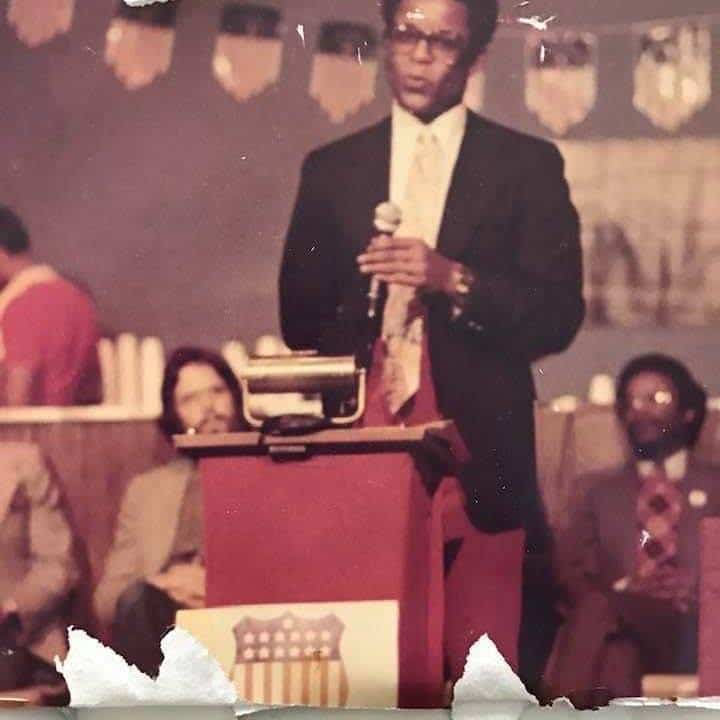
In 1976, America’s Bicentennial year, my civic-engagement journey began through Concerned Citizens for Minority Affairs. We organized Democratic presidential activity in Des Moines focused specifically on issues affecting minority communities.
After that work, I joined Jimmy Carter’s Iowa presidential campaign and served as its Iowa Minority Education Coordinator. Official Iowa legislative historical records document that position today. Carter became president.
That 1976 work became a foundation for what eventually evolved into the Brown & Black Presidential Forums of America. In 1984, the formal Brown & Black Presidential Forum brought presidential candidates into a setting centered on issues affecting Black and Latino Americans.
The work continued across generations. Jesse Jackson participated. Barack Obama participated. Republicans and Democrats participated.
Brown & Black is nonpartisan. Its purpose is not to tell Americans which political party deserves their vote. Its purpose is to create opportunities for citizens to hear candidates, question them, examine issues and make informed decisions for themselves.
Nonpartisanship With Receipts
Brown & Black’s nonpartisanship is not a position adopted because Iowa’s presidential calendar changed. It is part of the organization’s documented history.
In 2015, Republican Governor Terry Branstad, Democratic Congressman Dave Loebsack, Iowa Democratic Party Chair Andy McGuire and Republican Party of Iowa Chair Jeff Kaufmann joined Brown & Black co-founders Mary Campos and me around the organization’s presidential work. Branstad described preserving Iowa’s national position as a bipartisan effort. At the time, I summarized our approach simply: “Black and Brown, Republicans and Democrats – We do work together.”
That cooperation continued. In 2021, Iowa Democratic Party Chair Ross Wilburn – the first Black person to lead the state party – received racist threats, including a threat referencing lynching. Kaufmann publicly condemned the threats. Soon afterward, Mary Campos and I met with Wilburn and Kaufmann. Our discussion encompassed both the threats and the future of Iowa’s first-in-the-nation presidential role.
Brown & Black stated that “in the spirit of unity,” we stood with political leaders across party lines who discouraged such deplorable activity.
We did not have to agree politically to agree that racism and threats of violence were unacceptable – or that democracy sometimes requires people on opposite sides of an election to stand on the same side of a principle.
That, too, is part of Iowa’s record.
From an Iowa Forum to an Emmy
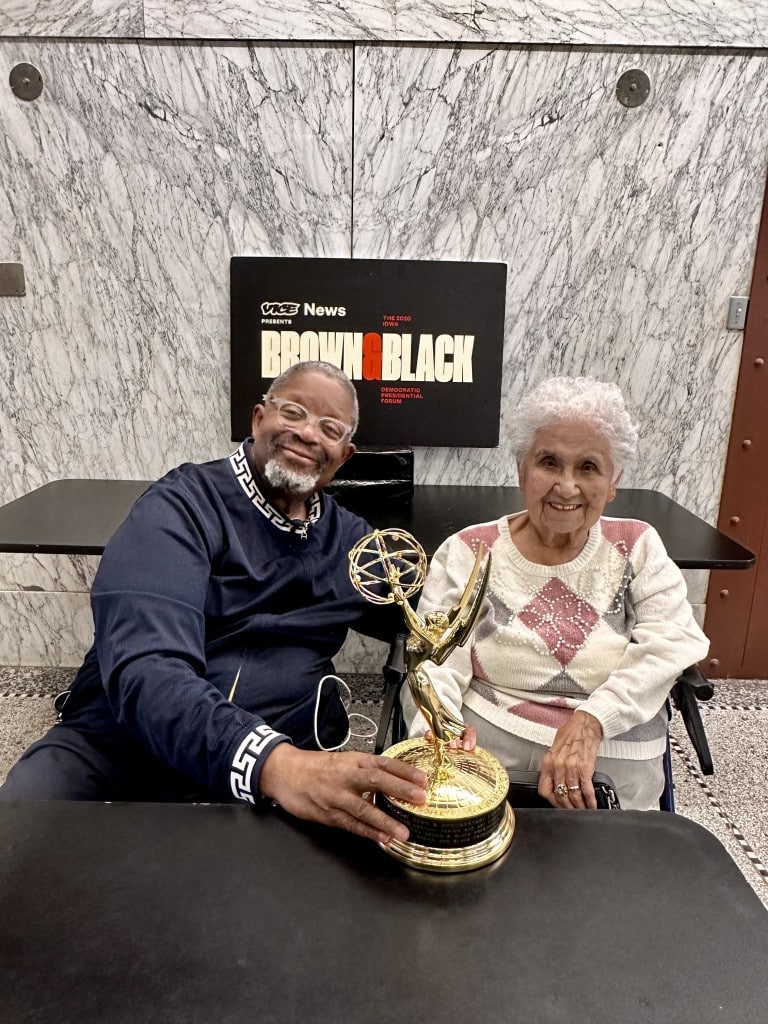
The Brown & Black tradition continued into the modern media era. The 2020 Iowa Brown & Black Presidential Forum brought major Democratic presidential candidates to Des Moines on Martin Luther King Jr. Day in partnership with VICE News.
At the 42nd Annual News & Documentary Emmy Awards in 2021, The 2020 Iowa Brown & Black Presidential Forum, produced by VICE News, received an Emmy for Outstanding Graphic Design and Art Direction: News.
2008: Iowa Confronts Its Own Racial Disparity
At approximately the same moment Iowa helped launch Barack Obama, the state was confronting one of America’s most disturbing racial disparities in criminal justice.
As a member of the Iowa House of Representatives, I authored legislation requiring minority-impact statements for certain criminal-justice legislation. Iowa Legislative Services Agency materials identify Iowa as the first state to statutorily require minority impact statements.
The concept was straightforward: before government enacts a policy, should policymakers try to understand whether that policy could produce disproportionate consequences?
The idea did not remain within Iowa’s borders. Racial-impact approaches subsequently appeared in policy discussions and legislation across the country.
I do not mention my involvement to claim Iowa solved racial inequality. It did not. I mention it because it presents the same contradiction encountered throughout Iowa history: a predominantly white state with an enormous racial disparity became a laboratory for an innovative method intended to confront that disparity.
From Racial Impact to 21st-Century and Beyond Impact Thinking
What began with examining the potential racial consequences of legislation belongs to a much larger 21st-century and beyond conversation about impact measurement: how governments, institutions, businesses and technology companies anticipate, measure and respond to the human consequences of decisions.
The challenge becomes larger as we look toward the 22nd century and America’s next 250 years.
Institutions will change. Technology will change. Demographics will change. The meaning and language of identity will continue changing. Some of the public-policy problems confronting Americans in 2076 or 2176 may barely be imaginable in 2026.
The larger principle can survive those changes: before we act, can we ask who may be affected, how they might be affected, what the evidence tells us, and what unintended consequences we should anticipate?
That is no longer merely a question of racial impact. It is a question of whether democracy can learn to think ahead.
Who Gets to Ask America the Questions?
For nearly half a century, Brown & Black has helped ask presidential candidates questions. Perhaps part of our next chapter involves helping ask America questions.
Public-opinion polling and exit polling help determine what Americans believe they know about themselves. They influence news coverage, campaign strategy and public policy. Exit polling also provides information election returns alone cannot provide about who voted, how groups voted and what motivated voters.
This is not a new thought for Brown & Black. In 2024, Black Iowa News reported on our exploration of polling and public-opinion work, including discussions involving Howard University’s public-opinion expertise. Days later, I discussed the polling concept nationally on CNN.
The objective should never be to create a “minority poll” whose purpose is to manufacture a predetermined Black or Brown answer. Credible research has to allow the evidence to surprise us.
The larger question is: Who gets to ask America the questions?
Organizations rooted in communities historically underrepresented in traditional political institutions should not merely be subjects in somebody else’s polling tables. They can help formulate questions, identify issues, reach respondents and interpret findings while following rigorous professional standards.
For nearly 50 years, Brown & Black has helped ask presidential candidates questions.
Perhaps part of our next chapter is helping ask America questions.
Project VOTE and Beyond Iowa
Forums and polling are only parts of civic participation.
Project V.O.T.E. – historically documented by Brown & Black as Voting Opportunities Through Education – has roots in the organization’s earlier presidential-cycle work. As we prepare for the future, the purpose remains consistent with our nonpartisan history: expand opportunities for citizens to understand the process, examine issues, question candidates and make informed decisions for themselves.
Brown & Black’s work will continue. As America’s presidential nominating landscape changes, we intend to continue our nonpartisan tradition of presidential and other candidate forums, strengthen civic engagement through Project VOTE, expand our work in public-opinion research, and – for the first time in our history – explore opportunities to take nearly 50 years of Brown & Black experience beyond Iowa.
The presidential calendar has changed. Our commitment to participation has not.
After 50 years in civic engagement, I increasingly think not only about the history I have witnessed, but about what that history can teach the generations coming behind me. Institutions endure when experience is preserved, lessons are shared, and new generations are given room to carry the work forward in ways suited to their own time. That is part of how I think about the next chapter – not as an announcement of any particular future initiative, but as a responsibility to leave useful civic knowledge behind.
We are intentionally not announcing every future initiative, location or format here. This is a historical and educational essay, not a campaign announcement. The important point is that Brown & Black is not finished.
The Human Lesson
There is a human lesson running through this history that may be more important than any political argument in this article.
Iowa has never been free of racism. Neither has America. Yet repeatedly, people have done things that the demographics, prejudices and expectations of their time might have suggested they would not do.
During the Civil War, tens of thousands of people from a young, overwhelmingly white Iowa entered Union service in a war that ultimately destroyed American slavery. Half a century later, Fort Des Moines became the nation’s first training site specifically for African American Army officers. Jesse Jackson built relationships with white farmers in Greenfield. Barack Obama won Iowa and later carried the state in two presidential elections. And in 2021, when Iowa’s first Black Democratic Party chair received racist threats, Black, Brown and white Iowans – Democratic and Republican leaders among them – stood publicly against those threats.
Perhaps that is the lesson: we should be careful about deciding what people are capable of simply by looking at what they look like, where they live, or which political party appears beside their name.
Iowa’s history contains prejudice. It also contains courage. Sometimes they existed at precisely the same moment.
That is not merely Iowa’s story. It is a human story.
I began my civic-engagement journey in 1976, when America celebrated its 200th birthday. Now, 50 years later, America is 250 years old, and I am still involved.
The America completing its first 250 years looks profoundly different from the country that began them. Enslaved people had no political voice. Women could not vote. Native Americans, Black Americans and generations of other citizens were denied rights and opportunities Americans today consider fundamental to democracy.
America changed because people challenged those limitations. America remains unfinished. And America will change again.
That is why I welcome serious efforts by any political party to broaden democratic participation. If the Democratic Party’s new early-state calendar gives millions more historically underrepresented citizens meaningful influence in selecting its nominee, that should be recognized – and measured.
Iowa has not disappeared from presidential politics. The geography of the two parties’ nominating processes is changing. Republican leaders have publicly supported preserving Iowa’s first-in-the-nation Republican role, while Democrats have selected a different early-state path. Brown & Black’s underlying principle does not depend on which party controls which calendar.
Our work is about participation, access and civic education – not allegiance to one political party.
The next 250 years should not be about pretending race no longer matters. History tells us otherwise. But neither should they be about assuming what an American will believe, support, accomplish or contribute simply because we know that person’s race – or because we know the racial percentages of the state in which that person lives.
Democracy cannot ultimately succeed if Americans can only hear people who look like themselves. It cannot succeed if we will only vote for people who look like ourselves. And it cannot succeed if we are unwilling to defend the rights of people who do not look like ourselves.
As America enters its next 250 years, perhaps our questions should become larger:
Who is being heard? Who is participating? Who has yet to be invited to the table? Who gets to ask America the questions? What have we learned from our first 250 years? And what are each of us prepared to bring to the table for the next 250?
After 50 years in civic engagement, I remain convinced of something.
Give people the opportunity.
Give them a voice.
Then judge them by their record.
Iowa has a record.
And that record deserves to be remembered.
Related Articles
Sorority hosts candidate conversation at Corinthian Baptist Church in Des Moines
The Alpha Kappa Alpha Sorority, Iota Zeta Omega Chapter, hosted Connect & Lead, A Candidate Conversation on Sept. 29, at Corinthian Baptist Church.
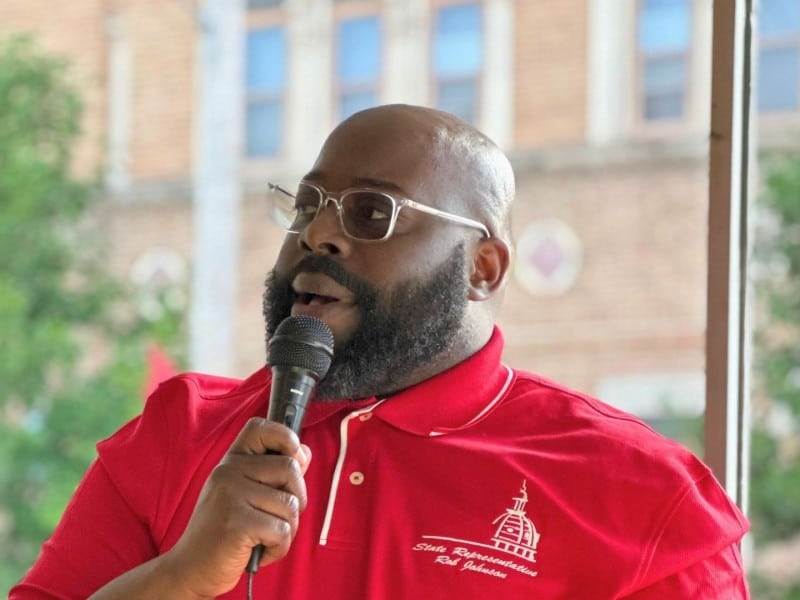
Unopposed Doesn’t Mean Unimportant: Rob Johnson Urges Community to Vote
State Rep. Rob Johnson (D-Des Moines) is running unopposed but wants all Iowa voters to turn out for the Nov. 3 general election.
2028 Independent Presidential Candidate Diane Sare Has a Message for Black Voters: Look Beyond Democrats and Republicans
Diane Sare, an independent presidential candidate, decries the “billionaire perverts running things.” Says the U.S. needs a mission, as she laid out her plan during a campaign visit to Iowa.