
National panel says sentences based on prior criminal records can increase both prison terms and racial injustice
A national organization gathered experts together to discuss the problems with mandatory minimum sentencing.
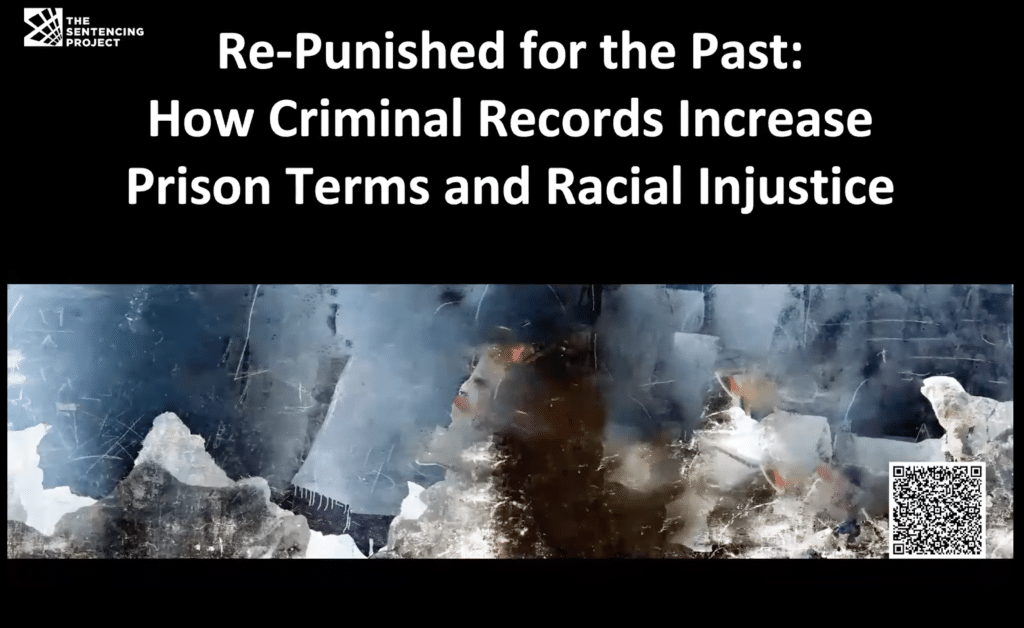
A national report, “Re-Punished for the Past: How Criminal Records Increase Prison Terms and Racial Injustice,” has found that increasing prison sentences for people based on their prior criminal records leads to worsening racial disparities for Black Americans.
The report by the Sentencing Project, a non-profit organization advocating for humane responses to crime through racial, economic and gender justice, opposes mandatory minimum sentencing laws, such as “three strikes,” “habitual offender,” “career criminal” and life sentences.
Nazgol Ghandnoosh, the Sentencing Project’s director of research, who co-authored the report with Bobby Boxerman and Celeste Barry, examined sentencing data from Maryland, Minnesota, Pennsylvania and Washington between 2012 and 2022.
“We believe that these sentences deserve special scrutiny because they’re often excessive,” Ghandnoosh said, during a recent webinar. “Imprisoning people when their likelihood of committing another crime has significantly declined [is excessive].”
Iowa Republicans have pushed for a “3 strikes” law that would impose mandatory 20-year sentences for repeat offenders. The bill passed in the Iowa House and is with the Iowa Senate. Proponents cite protecting victims. Critics say it would increase racial disparities and lead to new prison construction.
When it comes to racial disparities, Black people sentenced for 10 years or longer typically had a higher criminal record in comparison to whites, which contributed to Black people having lengthier sentences. The Sentencing Project recommends that sentences of 10 years or longer, based on past criminal convictions, should contribute to no more than 10% of sentence lengths.
“What we would love to happen is for the country to move towards reducing the impact of criminal records on sentencing and not to such a significant extent of repunishing people for offenses that they have already been punished for,” Ghandnoosh said.
Esther Matthews, an academic member of the Washington State Sentencing Guidelines Commission, spoke during the webinar about how the smallest of details can affect prison sentencing. Matthews, who was incarcerated herself, shared that, after studying criminology upon getting out of prison, she saw the importance of language in policy.
“[Being a part of the commission] has given me a much deeper appreciation for how one word in a bill can have a massive sentencing impact on people who are going to be sentenced under that policy,” Matthews said. “Words like shall, words like must, there’s all types of unintended consequences.”
She continued. “Just last year, the Sentencing Guidelines Commission took a position on a bill that affected whether or not juveniles could be sentenced for a prison riot. That law was only intended for adults, but there was a change in legislation, the wording, and all of a sudden, we had a whole bunch of juveniles being sentenced for up to 10 years for what basically amounted to a fight in a juvenile facility.”
The report questions whether long prison sentences actually make people safer. It details how these sentences don’t do much to prevent crime, since most people don’t expect to get caught in the first place. It also notes that as people get older, they are less likely to commit crimes again, which raises doubts about the need to keep them in prison for so long. The research lists five amendments to achieve changes in sentencing guidelines:
Expanding opportunities for judges to depart from recommended sentences that they find to be excessive.
Excluding many types of prior convictions from criminal record score calculations, such as convictions for offenses committed under age 18 and many drug convictions
Reducing the impact of the number and severity of prior convictions on the criminal record score calculation
Significantly reducing how much time criminal records can add to new sentences
Restricting criminal record calculations to consider only convictions from the preceding seven years Panelists connected the sentencing practices to broader patterns of mass incarceration in the U.S. According to the Prison Policy Initiative, the U.S. has the world’s highest incarceration rate, with nearly 2 million people held in prisons and jails, representing around 25% of the world’s incarcerated population.
Of that percentage, Iowa ranks seventh in the nation in terms of states with the worst racial disparities in their prison system, according to the organization.
Maintaining individuals in prisons costs millions of dollars, primarily funded by taxpayer dollars through federal and state government funds. Experts argued that policies that increase sentences based on past convictions contribute to these high numbers while straining public resources. Ojmarrh Mitchell, professor of Criminology, Law, and Society at UC Irvine, said that there are ways to prevent disparities through mass incarceration.
“We can reduce the use of imprisonment while maintaining public safety. We can reduce our emphasis on prior record points and, as a residual effect, reduce racial disparities and imprisonment,” Mitchell said. “We can triage who we send to prison. We can save taxpayer money. We can do all of these things by simply being more discerning about who we send to prison and more discerning about the amount of emphasis we give prior record points.”
Fiscal Note
Iowa Legislative Services Agency Minority Impact
Iowa ”House File 2542 enhances penalties related to habitual offenders and may disproportionately impact Black individuals if trends remain constant.” After the Iowa House passed HF2542, the issue moved to the Iowa Senate. The legislature is still in session. Check BlackIowaNews.com for updates.
This story appeared in the April edition of the Black Iowa Newspaper.
Author

Related Articles

Iowa House Study Bill 780 would ban ‘warrant resolution clinics,’ allowing residents to resolve low-level warrants without jail time
Updated: Iowa House lawmakers passed HF 2787 to ban counties and other entities from hosting events to help people with outstanding low-level warrants avoid jail.
Meet Sioux City’s local Black author and historian: Jim Tillman
Telling Black stories. Author Jim Tillman has deep roots in Sioux City, Iowa, and he has made it his mission to shepherd Black history there.

Rest in Iowa: George Foreman’s family visits boxer’s burial site in Sioux City cemetery
Even though boxing legend George Foreman wasn’t born in Iowa, he wanted to be buried in Sioux City.