
You Need to Thank Thurgood Marshall
OPINION: Find out why Shade Burgs says the nation owes a debt of gratitude to Thurgood Marshall.
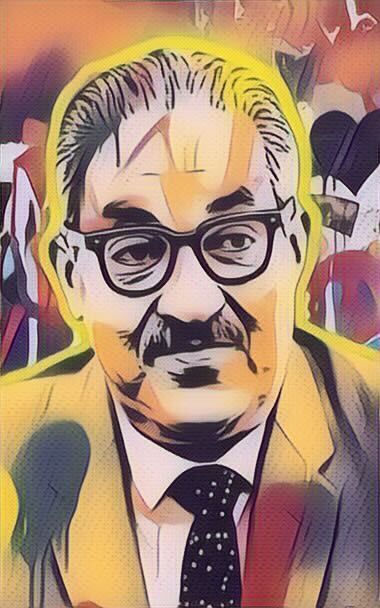
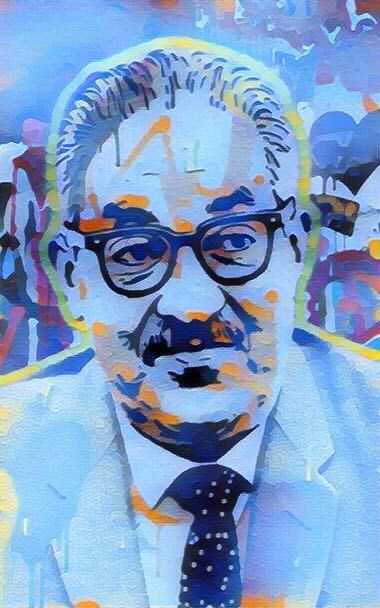
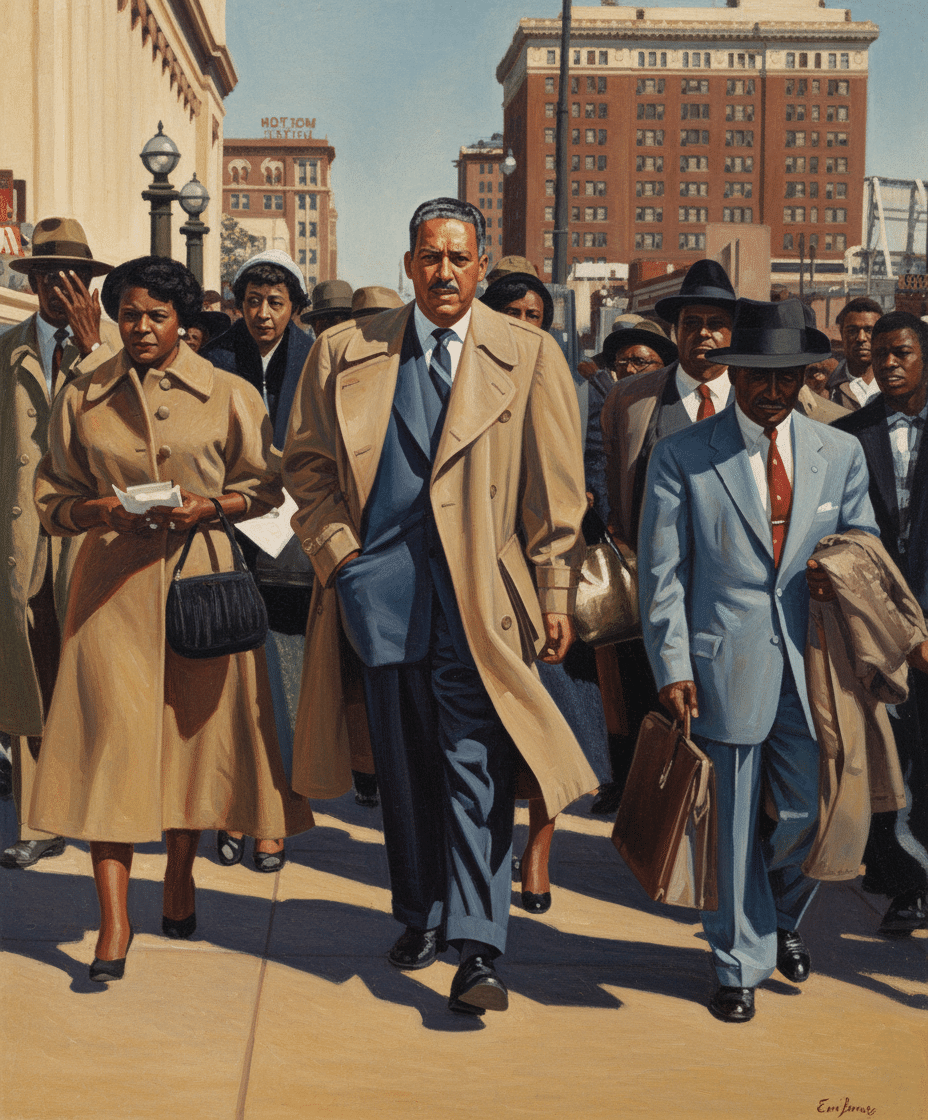
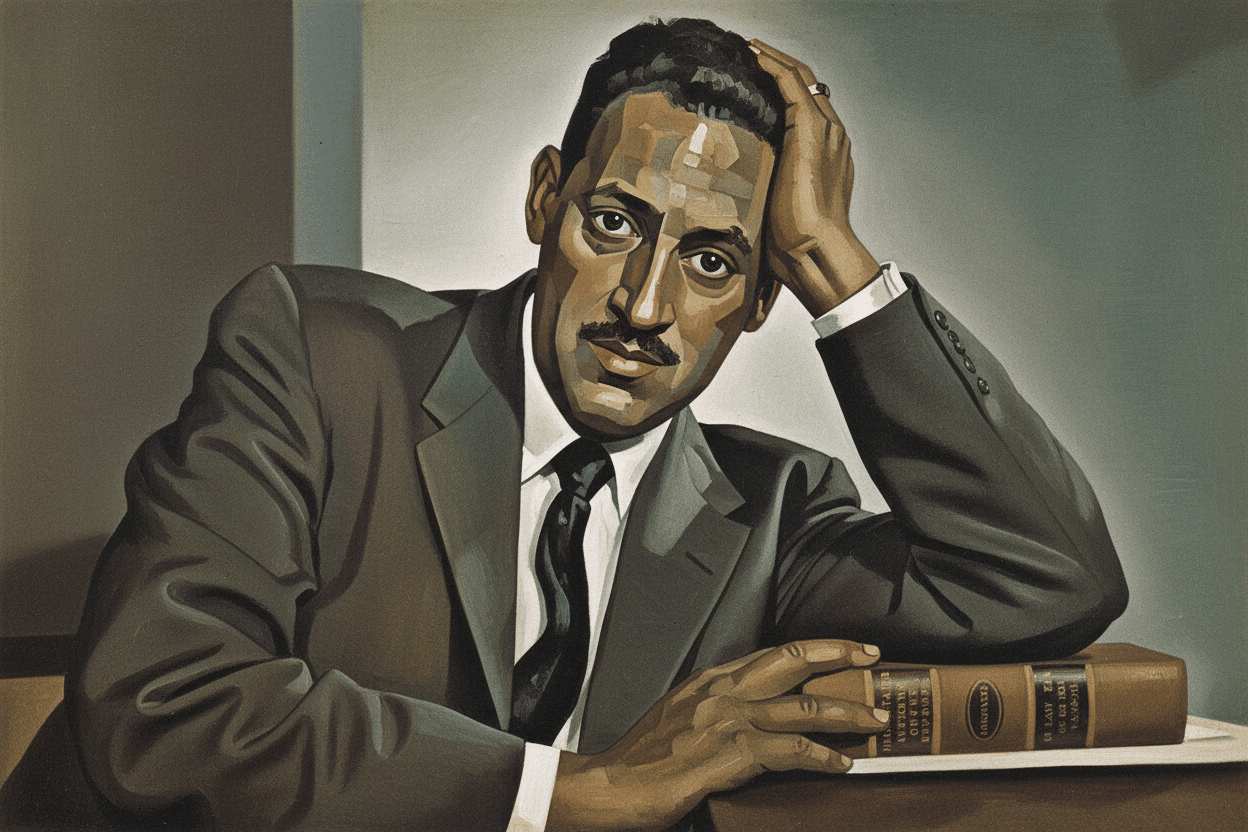
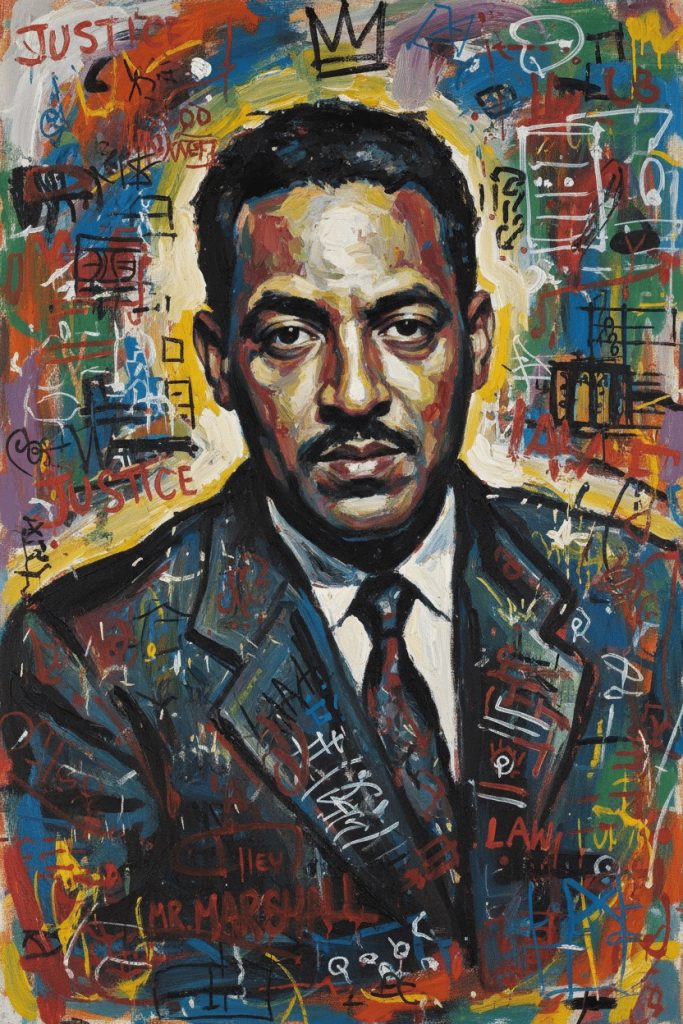
Thurgood Marshall, because American legal and Civil Rights history needed one man to drag the country toward equality under the Constitution, stands as one of its most consequential figures. His life and work artfully shaped what justice was supposed to mean in the U.S. As the first Black Justice of the Supreme Court, he carried not only extraordinary legal brilliance but also the scarred wisdom of firsthand encounters with systemic racism, especially in the Jim Crow South, where he fought discriminatory laws and the officials who enforced them with grim determination.
Long before that historic appointment, Marshall had already built his name by confronting injustice head-on, using the very legal machinery designed to crush Black Americans as a weapon to dismantle segregation and inequality. To Thurgood, the law was a work of art whose beauty radiated equality for all. It was a musical sonata whose notes vibrated with melodic liberty. It was an operatic play in which tragedy ultimately led to unbiased, far-reaching justice. The law wasn’t just his work; it was his poetic life mission to create a legacy from which all Americans reap benefits.
The law was never some cold, procedural nuisance but something far heavier. It was a living, breathing force, aching with possibility when handled with precision and conviction. His life’s mission became the pursuit of that fragile ideal with an ironclad insistence that the Constitution serve all citizens equally instead of selectively.
Born Thoroughgood Marshall on July 2, 1908, in Baltimore, Maryland, Marshall grew up in a home that deeply valued education and critical thinking, because, of course, that is where such stubborn determination begins. His father shortened his name to Thurgood when he was in the 2nd grade. His father, William, a railroad porter who later worked at a whites-only country club, loved legal debates and often took young Thurgood and his older brother Aubrey to watch courtroom proceedings much like other parents would take their kids to sporting events, planting an early fascination with the justice system.
At home, the conversations about these cases were lively and demanding, sharpening their minds from childhood for whatever the future held.
His mother, Norma, a Black elementary school teacher, stressed intellectual growth through reading and urged them to read authors such as W. E. B. Du Bois, Booker T. Washington, and Frederick Douglass to explore literature and philosophy, thereby widening their understanding of society and human thought. That combination of practical exposure to law and a strong intellectual foundation helped shape their worldview in ways that could hardly be undone. Their steady devotion led to the making of both a doctor and a lawyer. Aubrey became a doctor but was listed as “staff” at Seaview Hospital in Manhattan and worked directly with Black patients, treating tuberculosis alongside a group of nurses known as the Black Angels.
As a student, Marshall was both capable and mischievous, remembered for his jovial sense of humor and cleverness. If anything, he was the textbook example of a smart kid — but more. In one instance, as punishment, he was made to read, memorize, and recite the Constitution in its full entirety.
I think that Marshall and his father’s love of the legal process may have sparked his interest in the justice system. As a Constitutionalist myself, I can completely understand how reading the document, comprehending the words and understanding what it is and how the framers intended it to be used definitely does challenge you while also forming your opinions.
After high school, he attended Lincoln University, which, at the time, was considered the Princeton of Black colleges. Attending Lincoln gave Thurgood an arsenal of tools that his counterparts were ill-equipped to deal with. He was known on campus as a walking encyclopedia of legal and philosophical information, able to quote accurately from case law to Socrates from memory.
Shortly after graduating with honors from Lincoln, he attended The Howard University School of Law, where, under the mentoring of Dean Charles Hamilton Houston, he thrived. Dean Houston pushed all of his students to excellence and activism. He gave all of his students one simple yet monumental mission: “The only purpose of your existence at this level is the uplifting of your people; everything else is secondary.”
With that, he put all of his students to task daily. Memorization, recitation, debating, writing and theorizing weren’t just things students did: They were ingrained into each student as if their very lives depended on these abilities and with good reason, as in the case of Marshall, they did.
There was an interesting incident between Marshall and Houston where Marshall made a mistake on a paper and debated Houston’s correction. Houston then held a mock trial, calling nine current and former students as witnesses. He issued mock subpoenas for their notes from his class, and even put Marshall himself on the stand to testify, proving point by point over a 3-day period that not only was Marshall wrong, but also citing each individual time he had stated the correct information during his classes. Needless to say that while Thurgood put in a valiant effort, he was handed his first defeat and took that lesson to heart.
Houston demanded perfection from his students. In one of his addresses to his students, he said, “Everything you do in the courtroom from the basic paperwork to legal briefs to closing arguments must be flawless.” Houston was the motivation behind Marshall’s attack on “Separate but Equal.” He and a group of peers sat with the dean socially and formed a strategic plan to overturn the ill-fated Supreme Court decision. At graduation, he was not only valedictorian but also graduated “Magna Cum Laude.”
Immediately after law school, Marshall joined Houston in devoting himself to civil rights litigation. Their work laid the foundation for what would become the NAACP Legal Defense Fund, a central force in the struggle against racial discrimination. His career quickly gained momentum as he took on case after case challenging segregation, often in places where danger seemed to wait around every corner. His method combined painstaking preparation with a fearless willingness to confront injustice directly. Even when he lost, he used the defeat to build stronger appeals, a long-view strategy that made him an exhausting opponent in court. That persistence eventually helped him argue and win Brown v. Board of Education in 1954, declaring racial segregation in public schools unconstitutional and marking a bitterly overdue turning point in American history.
An interesting side note: Iowa desegregated its schools in 1868, becoming the first state to do so. The Iowa Supreme Court ruled in Clark v. Board of Directors that school segregation was unconstitutional, allowing 12-year-old Susan Clark to attend a previously all-white school in Muscatine. Marshall used this case as an example in his argument.
Marshall’s growing prominence made him a symbol of hope and endurance within the Black community, though hope in those years often had to survive humiliation and fear. His courtroom appearances drew crowds, and his mastery of the law earned respect even from those who opposed him.
Despite his fame, he remained devoted to the mission rather than personal gain, accepting only a modest salary. He endured constant threats of violence and death, yet pressed on, driven by an unwavering belief in justice. His experiences in the South, including near encounters with lynching, laid bare the stakes of his work and the courage it demanded.
After viewing hundreds of photos taken at lynchings, he said the thing that struck him most wasn’t the act itself nor was it the crowds of racists dressed in their “good clothes,” but the children in those images, some laughing and smiling as if somehow this was a normal thing. One day, while looking at photos, he said: “The thing that makes me most sad about this is it could be me in one of these pictures with little white kids playing, dancing and singing under my corpse swingin’ in the breeze.”
In the end, Marshall’s legacy rests not only on his victories but on his stubborn refusal to let the law become a lie. His deep understanding of the Constitution enabled him to force the legal system to confront its own ideals, exposing hypocrisy and demanding change from within.
Through his work, he altered the legal landscape of a nation, inspiring generations of activists and attorneys to keep fighting for Civil Rights.
Marshall left an imprint on me as a young man that shaped parts of who I am now. Justice Marshall taught me what “fair” truly meant, in a world that seemed determined to deny it. His story showed me that we, as Black people, were never asking for charity or welfare; We only needed racist people to stop standing in the way. We are fully capable of making, doing, and being on our own. His conviction was not selective. He understood that the laws and policies he fought for made life better not only for Black people, but for everyone. And that was the truth he carried and passed on: as long as Black people are oppressed, all people remain oppressed.
Now it feels as though we are watching once unthinkable efforts to unravel the hard-won gains made under Marshall by a Supreme Court willing to toy with our freedoms and rights under the idiotic assumption that this country is “post-racial,” and that such protections are no longer needed after 60 years, even though there are states that immediately shut down primaries after their recent decision to gut the voting rights act, just to redraw districts so Black and Brown people are left with no real representation in the process.
This most recent decision is just another in a series of horrible decisions the Supreme Court has made in its history. When you hear people say things like “This is the worst Supreme Court ever,” it means they have no understanding of the Supreme Court’s long-storied history of poor choices and bad decisions. (Yes, I’m totally going to write about that) and how one driven, determined, relentless Black man changed that.
So yes, you need to thank Thurgood Marshall.

Author

Related Articles

Iowa African Film Festival crowns first winners
Winners have been announced for a film festival featuring stories of Africa held in August in Des Moines.

Retired Black firefighter creates video game, Retro Robot Rescue, reflects on inspiration
Retired Black firefighter creates video game combining “classic arcade-inspired action with modern gameplay twists.”

Iowa African Film Festival to debut at Drake University, bringing authentic African stories to Iowa
The inaugural Iowa African Film Festival will be held Thursday, Aug. 6 through Friday, August. 7, at Drake University in Des Moines.