
From the ground up: Reimagining housing in Iowa City
David Houston, founder of nonprofit Homes for My Peeps, brings affordable housing for the Black community in Iowa.
Not long ago, David Houston sat in an Iowa City council meeting and listened as officials explained the city’s housing crisis. The cost of building homes and a lack of skilled workers seemed like straightforward reasons. While for most people in the room it seemed like a problem to be debated, for Houston it was a call to action.
“When are people going to take this into their own hands?” he thought.
As soon as he left the meeting, he went home and got to work.
Houston, 47, is a Des Moines native, designer and founder of two organizations working together to address the city’s housing crisis from the inside out. His for-profit, Beyond Architecture Design Build LLC, handles architectural services, 3D renderings, construction documents and building.
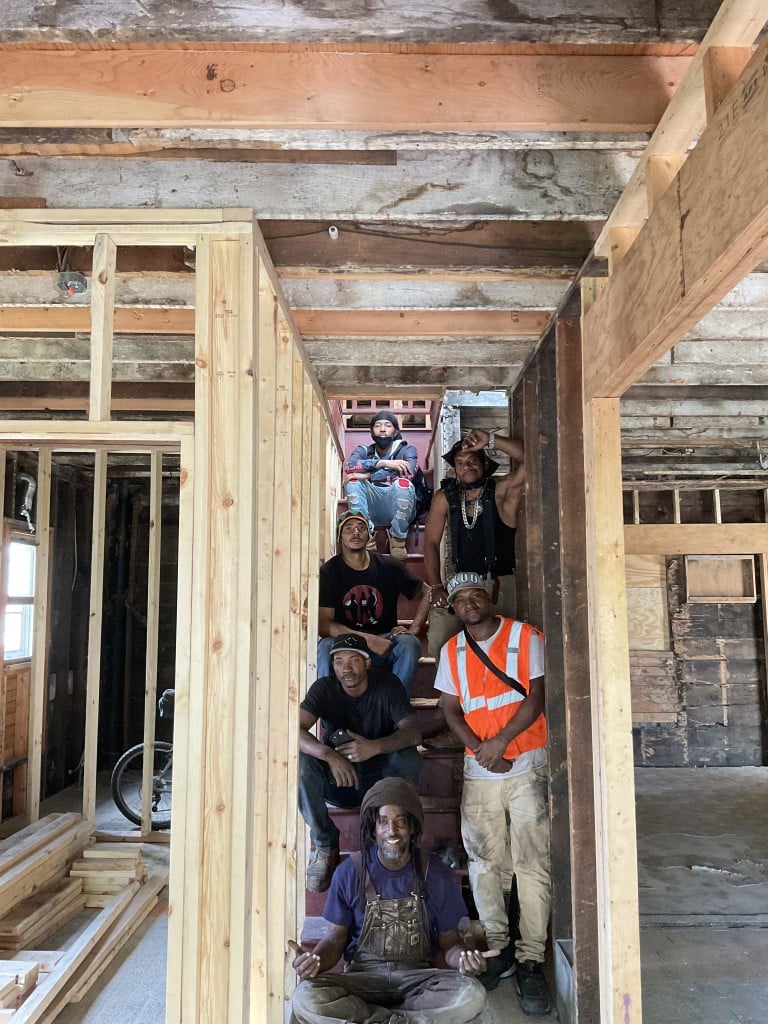
His nonprofit, Homes 4 My Peeps, is where the community work happens through workforce training, sustainable housing solutions and a vision for what a neighborhood built around those who live in it would look like.
Together, they form what Houston calls Roots and Domes, an initiative he launched this spring with support from the Greater Plains Action Society, a nonprofit advancing climate justice, social equity, and Indigenous sovereignty across Iowa and Eastern Nebraska, whose partnership helped shape the training program at the heart of the effort.
“I was doing a lot of residential construction and then I was seeing how much money was being poured into these units,” Houston said.
He spoke of how even when he was in college, the prices for housing were still high. “Prices for houses are so expensive because of markup prices because there’s so many people involved in the project rather than slimming down the amount of people involved. Now don’t get me wrong, you do need architects and engineers, but as far as pricing is concerned, they’re marking up prices to where these houses aren’t affordable to low income people.”
According to the Polk County Housing Trust Fund, there are only about 23 affordable and available rental units for every 100 extremely low-income renter households in Polk County, which is well below the national average of 35 per 100. Of these households, 35% to 42% of Black or African American households live in poverty, earning below the Federal Poverty level.
To address this problem, Houston is stripping the construction process back down. Through Homes 4 My Peeps, he runs an active workforce development program, with 13 trainees this year working 10 to 12 hours a day, split between hands-on work and instruction. After completing 120 hours, each trainee earns a certificate, which allows Beyond Architecture to hire them directly.
Houston built this system not only to help address the housing crisis but to expand the number of Black people who work in construction. Nationally, Black workers make up roughly 5% to 11% of the U.S construction industry, which is significantly smaller compared to White (52%-57%) and Hispanic (27%-32%) workers. Through this program, not only do Black Iowans receive construction training but also earn a stipend between $120 to $200 while they are completing their certificate before being employed by Beyond Architecture.
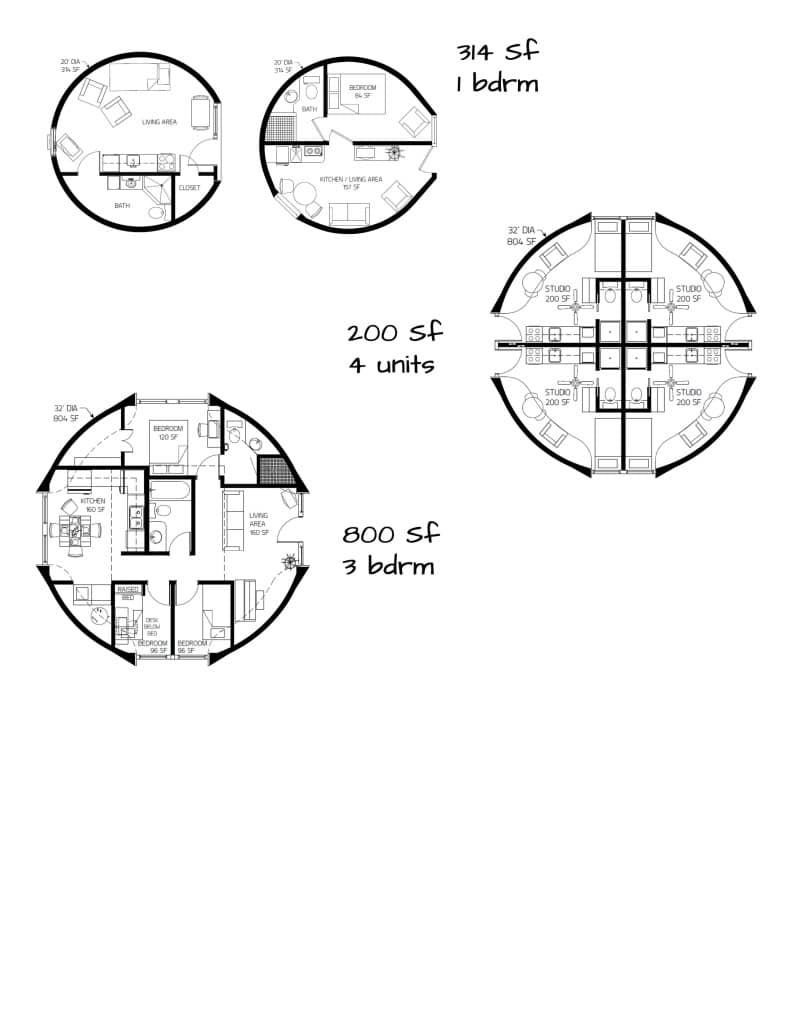
The houses Houston wants to build are not traditional houses, but domes, with the end goal of providing housing that is sustainable.
“In current housing, you deal with termites, hurricanes and all sorts of natural elements,” Houston said. “With a concrete dome, you’re not dealing with termites, damaged siding or damaged shingles. They’re hurricane-resistant, tornado-resistant. The domes are more efficient and durable.”
For these homes, he managed to get the cost down to $85,000 to build them from start to finish, a number he says puts homeownership within reach for people who have been priced out of the current market.
“Nothing in nature has straight lines,” he said. “But yet we live in square houses.”
Houston studied architecture at the Southern University in Baton Rouge, Louisiana, but moved back to Iowa after graduating in 1996. He isn’t a licensed architect yet and is currently studying for the Architecture Registration Exam, but has been designing and building for decades. While his classmates went to offices drawing ceiling plans, he went into the field with his twin brother, who was framing houses.
Being a Black architect was a feat in itself. In the United States, licensed Black architects represent just 2% of the nation’s 115,000+ total registered architects. Houston describes navigating a glass ceiling in the industry, where few people in positions of power are willing to invest in minority-led architectural work. This is one of the reasons why he views this project as an opening. No one else is building concrete domes, his crew is all Black and his mission for sustainable housing has been a long time coming for Houston, who has aimed for this since high school.
The first dome is Houston’s next milestone, which he hopes to achieve by the end of the year, with construction beginning this summer. Eventually, he sees four domes to start before expanding to Omaha, Texas, Arizona and Louisiana in the next five years.
“We’re moving forward. This mission and vision has been with us for as long as I can remember,” he said. “The organizations will just keep doing what we’ve been doing. We’re going to push through no matter what.”
To get there, Houston is looking for help, specifically an advisory board. Homes 4 My Peeps already has a board in place, but he is seeking for people with professional expertise in finance, law, banking, real estate and accounting, ideally professionals of color who understand the vision and the systems it has to navigate.
Although the work is in its early stages, the framework is there. A for-profit, a non-profit, a training program and a pilot project, built to help low-income Iowans build themselves from the ground up.
Correction: The version of this story in the July edition of the Black Iowa Newspaper contained an error. We apologize for the error.
Author

Related Articles
Iowa’s water quality crisis inspires Black leaders to pursue solutions
A cohort from the African American Leadership Academy studied Iowa’s Water Quality Crisis and developed a proposal to bring safer drinking water to Des Moines’ Black residents.

Letters to the Editor: Say ‘No’ to Iowa Constitutional Amendment 1
Want to share your opinion? Email your letter to the editor to Black Iowa News. Email letters@blackiowanews.com.
Clash of the Clippers: More Than a Barber Competition
Clash of the Clippers spotlights Iowa’s Black barbers, celebrating their artistry, entrepreneurship and cultural influence through competition and community connections.