
Iowa’s water quality crisis inspires Black leaders to pursue solutions
A cohort from the African American Leadership Academy studied Iowa’s Water Quality Crisis and developed a proposal to bring safer drinking water to Des Moines’ Black residents.
Editor’s note: To donate to the “Water Within Reach” fund, click here.
A group of Black leaders in Des Moines, concerned about Iowa’s longstanding water quality issues and their intersection with high cancer rates, has developed a proposal to bring a reverse osmosis water filtration station to Des Moines for community use.
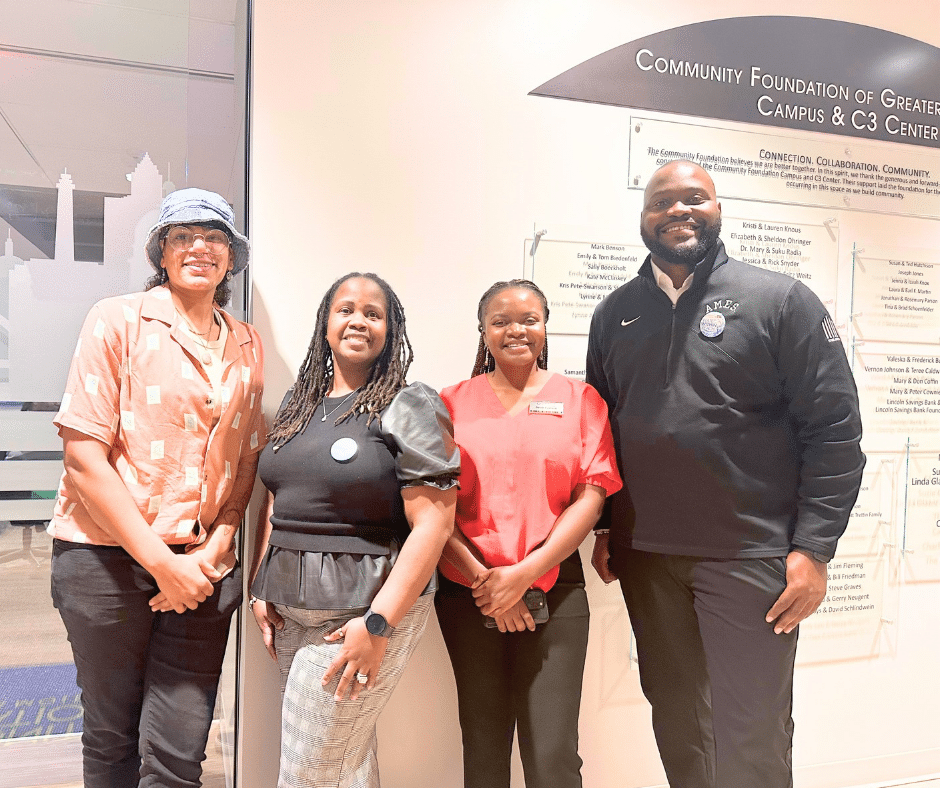
Four members of the African American Leadership Academy cohort, Jarael Madyun, Betret Eustace, Shadonna Head and Indigo Moore, discussed their proposal, Water Within Reach, to raise about $25,000 to purchase a community water station for central Des Moines’ Black community.
“What does safe water mean to you?” Madyun asked attendees during the presentation held on Oct. 8 at the C3 Center in Des Moines.
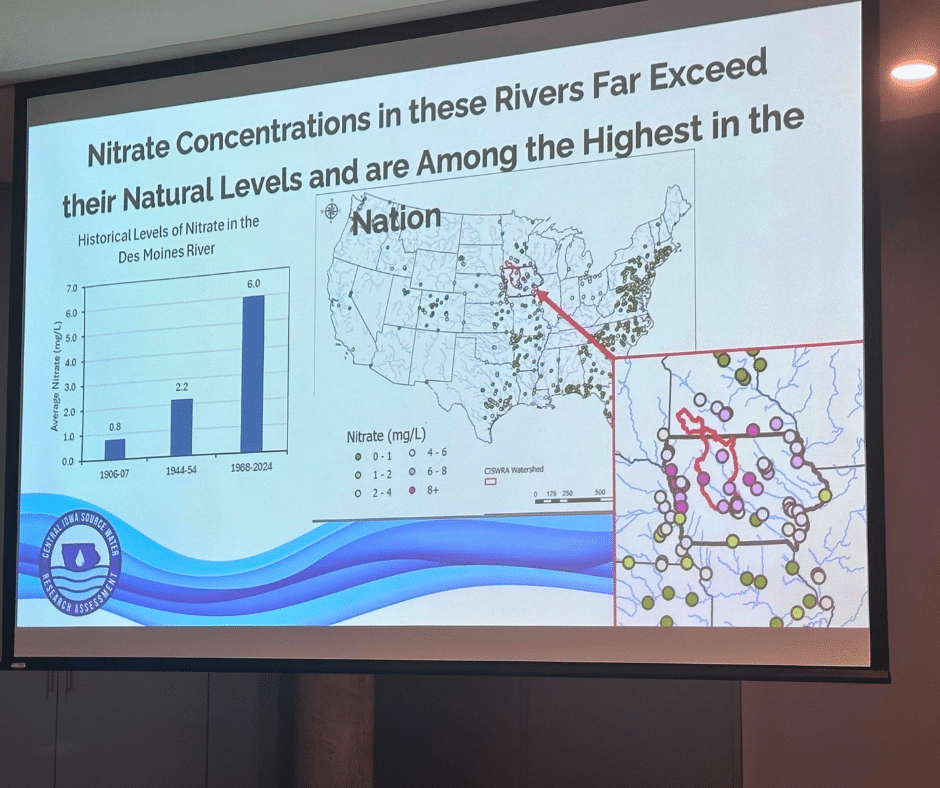
Betret Eustace, a P.h.D. student in civil engineering at Iowa State University and a member of the cohort, told attendees that nitrate and chemicals in Iowa’s water, along with other known cancer risk factors like age and genetics, are linked to cancer.
“80 percent of nitrate in our rivers is coming from agriculture,” farming practices, she said.
Iowa’s water quality continues to make headlines as candidates have elevated the issue — and Iowa’s disproportionate cancer rates — ahead of the Nov. 3 election.
The Environmental Protection Agency’s limit for nitrate, measured as nitrogen, is 10 mg per liter, but she said lower levels are still dangerous. Des Moines city officials and water quality experts, during a community meeting on Oct. 6, said the city’s nitrate level of 6 mg/l, is safe to drink and is below the federal standard of 10 mg/l, (after treatment) while acknowledging the need for monitoring systems and improvements.

“Above the limit, below the limit — it doesn’t mean it’s safe,” Eustace said.
Although the cohort has finished its work, Madyun said they plan to raise money for the water station and seek community input on where it will go and how it will be maintained.
“Our mission is to raise awareness about safe drinking water and help expand access to affordable water filtration,” said Head.
Moore said she hopes people will help fund the system, which resembles a vending machine and would be accessible to all.
Eustace said the group is focused on nitrate, but their solution would also remove other problematic chemicals. Eustace said solutions are expensive, but a community solution is viable.
The academy is an initiative of The Directors Council, which produces the One Economy report detailing the disparities facing Black Polk County residents. The cohort based its service-learning project on research contained in the report.
ADVERTISEMENT: PAID FOR BY RON LANGSTON FOR IOWA SENATE DISTRICT 17
This story appears in the October edition of the Black Iowa Newspaper. Clarification/Update: In the print edition, Shadonna Head’s name should appear like this.
Author

Related Articles
Letters to the Editor: Say ‘No’ to Iowa Constitutional Amendment 1
Want to share your opinion? Email your letter to the editor to Black Iowa News. Email letters@blackiowanews.com.
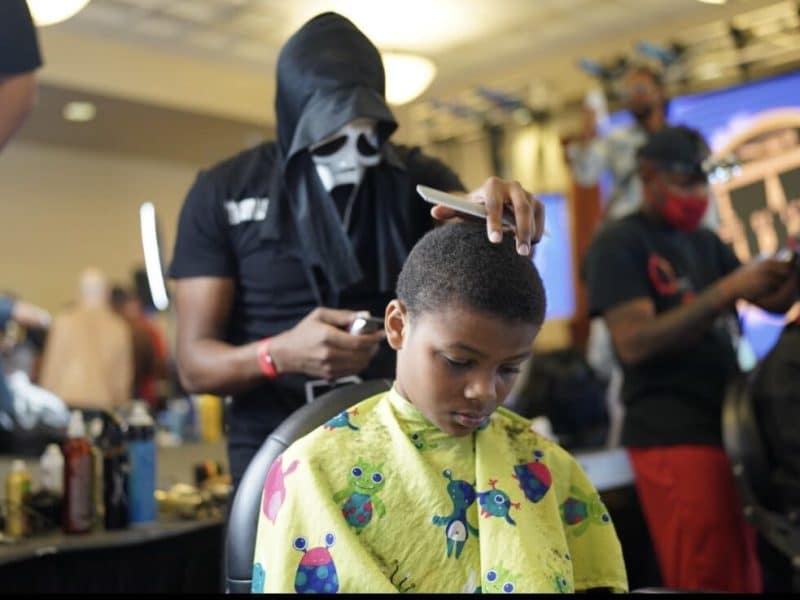
Clash of the Clippers: More Than a Barber Competition
Clash of the Clippers spotlights Iowa’s Black barbers, celebrating their artistry, entrepreneurship and cultural influence through competition and community connections.

Five Des Moines students receive Inaugural Teree Caldwell-Johnson Servant Leader Scholarships
The inaugural scholarship recognizes underserved students pursuing higher education while carrying forward Teree Caldwell-Johnson’s commitment to opportunity and service.