
Iowa House District 71 candidate DeLano Cain-Watson feels ‘deep responsibility to make sure Black Iowans are not treated as an afterthought in state policy,’ but as ‘vital’
Black Iowa News Q&A: Get to know DeLano Cain-Watson, a candidate for Iowa House District 71 in Dubuque, Iowa.

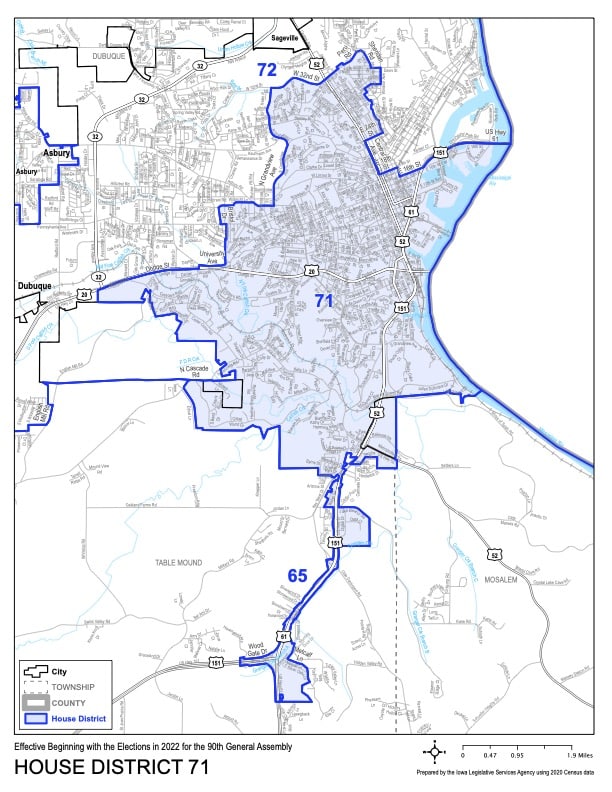
Black Iowa News invited candidate DeLano Cain-Watson, Democrat, to discuss his run for Iowa House District 71 in Dubuque. The seat has been held since 2019, by Rep. Lindsay James, D-Dubuque, who is running for U.S. House District 2.
If Cain-Watson wins, he would become the first Black man elected to Iowa House District 71 in the Iowa Legislature. Here are his emailed responses to the questionnaire by Black Iowa News.
The deadline for candidates to file for state offices is March 13, according to the Iowa Secretary of State. The primary election will be held June 2, 2026. The general election is Nov. 3, 2026.
Name: DeLano D. Cain-Watson
Age: 24
City of birth: Chicago, Illinois
Spouse/significant other/family members, pets?: Four brothers, a sister and 26 nieces and nephews
Occupation: Entrepreneur (self-employed massage therapist and yoga teacher)
Educational background: He earned a master’s degree in public administration in health care from Liberty University in 2025 and a bachelor’s degree of science in aviation management from the University of Dubuque in 2024.
Previous elected positions/and or campaigns: Appointed to City of Dubuque Equity and Human Rights Commission; previously ran for a seat on the Dubuque Community School Board.
City you currently reside in: Dubuque
When will you file the paperwork to run for House District 71?: Feb. 25, 2026
Who is your campaign manager + phone/email)?: Christina Baker, info@delano-hd71.com
Black Iowa News: What specifically motivated you to run for Iowa House District 71?
Cain-Watson: “What motivated me to run for Iowa House District 71 is the growing gap between who our leaders say they support and who feels represented. At the state and federal level, I often hear Democrats talk about uplifting young people, Black communities, LGBTQ Iowans and people impacted by the justice system. As someone who lives at the intersection of several of those realities, I know that lived experience matters just as much as good intentions. Representation is not only about policy positions. It is about whether people can see themselves reflected in leadership and feel invited into the political process.
During my school board campaign, I personally helped register close to 50 first-time voters who had previous felony convictions and did not even know they had the right to vote again. Watching people light up as they realized they still mattered and still had a voice was one of the most meaningful experiences of my life. No other candidate at the city, school board, or local level was willing to do that work. Many were afraid to go into the North End or engage with people who looked and sounded like me. I was not. That trust did not come from campaign mailers or slogans. It came from showing up and treating people with dignity.
I carry deep respect for many Democrats currently serving in Iowa. Many of them are good people who genuinely care. But it can be difficult for leaders who come from optimal environments to fully understand the realities faced by Black Iowans, LGBTQ Iowans, young people and those with felony convictions. People who have been involved in the justice system often sit at the intersection of so many issues Democrats claim to prioritize, from housing and employment to health care and civic engagement. They deserve more than sympathy. They deserve representation.
I am running because I believe trust is sacred. The Black community, the LGBTQ community, young people, and people with felony convictions trust me because I have shown up when others would not. I do not take that lightly. This campaign is about taking that trust and turning it into action at the state level. I want the next generation to know they belong in politics, not as an afterthought, but as leaders shaping Iowa’s future.”
Black Iowa News: Break down each piece of your S.P.A.R.K. platform and tell our readers why you’ve selected these as priorities.
Cain-Watson: S – “Strengthen Education for ALL. When I say strengthen education for all, the “for all” truly means every stage of life, from child care to adulthood. At the earliest level, Iowa must help subsidize child care so working families are not forced to choose between employment and safe, affordable care. At the K–12 level, the state is spending roughly $234 million on the private school voucher or ESA program, more than originally proposed, while public schools receive only single-digit funding increases that have not kept pace with the cost of living, even though universal free breakfast and lunch for public school students would cost roughly the same amount. This is especially unfair because private schools are concentrated in larger cities, leaving many families unable to access a program their tax dollars fund. At the high school level, I want to prioritize concurrent enrollment so students can earn guaranteed college credit instead of relying on AP exams that colleges may not accept. And for adults, strengthening education means expanding access to GED and trade certifications, especially for people returning from incarceration, so they can earn livable wages and avoid falling back into cycles of poverty or substance use.
P – Protect Housing Stability
Protecting housing means recognizing that stable housing should anchor families, not push them out of their communities. Iowa’s property tax burden accounts for about 3.25 percent of all personal income, totaling roughly $6.4 billion statewide, costs that are passed directly to homeowners and renters. Proposed reforms at the statehouse risk shifting the burden onto cities through levy caps that do not keep up with inflation, threatening public safety andessential services. These pressures fall hardest on manufactured home residents and low-income families, especially when corporate investors buy mobile home parks and raise rents with little warning. In District 71, rising housing costs force families to make impossible choices and push young people and seniors out of neighborhoods they helped build. Protecting housing means regulating corporate buyouts, strengthening tenant protections and reforming property taxes responsibly so people can stay rooted where they belong.
A – Address Health care Cost & Access
Addressing health care means building a system that makes people feel safe, not scared. Without ACA tax credits, health insurance premiums in Iowa could rise by 75 to 150 percent, forcing families to delay care or rely on emergency rooms. Iowa now ranks second in the nation for new cancer cases, with more than 21,000 diagnoses expected in 2025, a crisis tied to radon exposure and agricultural runoff. A 2025 state report also found that most maternal deaths in Iowa were preventable, with Black, rural, and low-income mothers facing the greatest risks. Clinics like Crescent Community Health Center serve thousands of patients each year and rely heavily on Medicaid, meaning cuts would devastate access across District 71. Addressing health care means protecting ACA credits, defending Medicaid, supporting community clinics, lowering prescription costs, and ensuring people can stay healthy enough to work, raise families, and remain housed.
R – Reinforce Behavioral Health Services
Reinforcing behavioral health means treating brain health as essential infrastructure, not an afterthought. Iowa’s mental health regions have been repeatedly restructured and underfunded, leaving counties and schools scrambling to respond to rising need. Dubuque County alone spent $27,000 on 818 doses of naloxone this year to prevent overdoses, a burden no county should carry alone. Statewide, fentanyl-related harm cost Iowa an estimated $2.2 billion in lost economic value in 2024, reflecting lives lost and families destabilized. Programs like Mindful Minutes for Schools show that early investment works by helping students manage stress and trauma before crises take hold. Reinforcing behavioral health means fully funding mental health regions, expanding school-based supports, strengthening crisis response, and ensuring access to addiction treatment across Iowa.
K – Keep Iowans Home
Keeping Iowans home is about belonging and possibility, because people leave when they cannot see a future where they live. Iowa’s average age is now 52, and the state has lost nearly 10,000 young adults ages 18 to 35 over the past decade. With the minimum wage still at $7.25, a full-time worker earns just over $15,000 a year, making it nearly impossible to afford rent or build stability. Iowa Workforce Development projects more than 140,000 unfilled jobs by 2030, while school enrollment has already dropped by more than 8,000 students since 2018. In District 71, young people want walkable neighborhoods, public transit, affordable housing, and cultural spaces that do not revolve around alcohol, yet those things are often missing. Keeping Iowans here means raising wages, investing in housing and transportation, supporting creative and career pathways, and building communities where people can stay and thrive.”
Why I Chose These Priorities
I chose the S.P.A.R.K. priorities because they reflect what people across District 71 consistently say they need to build stable, meaningful lives. Education, housing, health care, behavioral health and retention are deeply interconnected, and when one fails, families feel the consequences everywhere else. These priorities come from lived experience, community conversations, and years of showing up in spaces where policy decisions affect real people. They are not abstract ideas but practical investments that help kids learn, families stay housed, workers stay healthy, and young people remain in Iowa. S.P.A.R.K. is about investing upstream, protecting dignity, and building a state where people are supported not just to survive but to stay, grow and lead.”
Black Iowa News: What’s it like to be young/Gen Z and Black in Dubuque, and how does that factor into your decision to run for public office?
Cain-Watson: “Being a young candidate often means being told that you do not have enough experience to lead, even when the law itself says otherwise. In Iowa, you can run for state representative at 21 years old, as long as you are a U.S. citizen, have lived in Iowa for one year and have lived in the district for at least 60 days before the election. If age and experience alone were what qualified someone to govern, then we would have to ask why nearly all of our current leaders, most of whom are millennials or older with decades more experience than me, are the ones who led us into the challenges we face today. Clearly, experience by itself is not producing better outcomes. Young people pay taxes, register to vote, are required to register for Selective Service and live with the consequences of state policy every day. If we are trusted with all of that responsibility, then it is common sense that we should also be trusted to run for office and help fix what is not working.
Being Gen Z adds another layer to that decision. I became a legal adult in 2019, and my entire voting life has been shaped by political and economic trauma. COVID, the murders of George Floyd, Breonna Taylor and Elijah McClain, repeated economic downturns, and rising costs have defined our entry into adulthood. Gen Z did not create these conditions, but we are living with the long-term consequences of decisions made by previous generations. While no single generation is solely responsible, it has become clear that waiting for others to solve these problems has not worked. That is why many of us feel a responsibility to step up, not because we think we know everything, but because we will live the longest with the results.
Being Black in politics brings its own set of expectations and limits. There is an unspoken rule that talking honestly about differences between Black and white experiences risks alienating voters, even though white candidates are rarely expected to soften their reality in the same way. The issues that disproportionately affect Black Iowans are not foreign or divisive. They are Iowa issues that affect housing, health care, education and opportunity for everyone. If we keep prioritizing comfort over honesty, we will never move forward. This is not about red versus blue or Black versus white. It is about common sense versus avoidance, and about making sure the people most impacted by policy decisions have a seat at the table where those decisions are made.
Black Iowa News: The year 2025 has been difficult for many people due to rising food, housing and health care costs, unemployment and the divisiveness of political discourse. How will your platform and campaign motivate people and get them to register and get out to the polls?
Cain-Watson: A lot of people are tired right now, and that exhaustion is real. Rising food prices, housing instability, health care costs and job uncertainty have made it hard for many Iowans to feel hopeful about politics. My campaign starts by naming that reality honestly instead of glossing over it. I also bring this lens through my academic work. My master’s thesis focused on civic engagement in politically divisive times, and I interviewed 14 young Black voters from across Dubuque County along with six elected officials at every level of local government, from school board and city council to county-wide offices. What I heard consistently was that people disengage when they feel talked at, but they re-engage when they feel understood and respected.
One of the most important takeaways from that research is that voters and candidates are often experiencing the same pressures at the same time. We are all navigating higher costs, uncertainty and burnout together. My approach is not to relate to people in a transactional way or to ask for a vote without offering anything in return. It is to relate to them as neighbors and community members and to say clearly that we are in this together. The only difference between me and the people I talk to at the door is that I am committing to fight at the State Capitol, and I need the community here in District 71 to keep pushing alongside me. When people feel like they are part of something shared and not being used, they are far more willing to register, show up and stay engaged beyond a single election.”
Black Iowa News: What are you hearing so far from Dubuque residents about what they need most?
Cain-Watson: “What I hear most consistently from Dubuque residents is that they need access. And access means different things to different people, but it always comes back to whether systems are reachable, responsive and fair. People want access to affordable housing they can actually stay in, access to health care and behavioral health services before a crisis hits, access to schools that feel supported, and access to jobs that allow them to build a life here. That is why the S.P.A.R.K. platform resonates. Each piece is rooted in access, whether it is access to education across a lifetime, access to stable housing, access to care, access to mental health support or access to opportunity that keeps people in Iowa.
I also hear very clearly that people want access to their representatives themselves. Across District 71, residents say they are tired of only seeing politicians during election season. They want leaders who are present in the neighborhoods that need the most support, not just when votes are needed, but when communities are struggling. Access to representation means being able to ask questions, raise concerns and be heard outside of campaign events and photo opportunities. People want to know that their representative understands their day-to-day reality and is willing to show up consistently.
That connects directly to the “K” in S.P.A.R.K., keeping Iowans here. People are more likely to stay in a community when they feel seen, supported and represented. When residents feel shut out of decision-making or disconnected from leadership, they disengage and eventually leave. What I am hearing is a desire for leadership that is accessible, accountable and rooted in the community year-round. That kind of access builds trust, and trust is what keeps communities strong and people invested in Iowa’s future.”
Black Iowa News: What responsibility do you feel as someone who is Black to ensure Black Iowans’ voices and needs reach the statehouse?
Cain-Watson: “I feel a deep responsibility to make sure Black Iowans are not treated as an afterthought in state policy, but as a vital part of Iowa’s present and future. Black communities across the state experience many of the same challenges other Iowans face, but often with fewer resources and less margin for error. My responsibility is not just to speak about those realities, but to make sure they are reflected in the decisions being made. That means showing up prepared, informed and willing to advocate consistently, not only when it is comfortable or politically convenient.
I also feel responsible for translating lived experience into policy that benefits everyone. Issues like access to health care, stable housing, fair wages, quality education and behavioral health support may impact Black Iowans most sharply, but they strengthen the entire state when addressed properly. Ensuring Black voices are heard is not about creating division. It is about telling the truth about where systems fall short and pushing for solutions that lift all communities. When Black Iowans are included in policymaking, outcomes improve across the board.
Finally, I feel a responsibility to widen the door for those coming after me. Representation is not just about who holds office today, but about who feels invited to participate tomorrow. By bringing Black voices into the statehouse with clarity and consistency, I hope to normalize the presence of Black leadership in Iowa politics and make it easier for others to step forward. That responsibility is about honoring those who came before us and ensuring future generations know their voices belong in every room where decisions are made.”
Black Iowa News: What do you need from the community to win this seat?
Cain-Watson: “To win this seat, I need the community to stay engaged and to believe that this campaign belongs to all of us. That means people talking to their neighbors, showing up to events, helping register voters and reminding one another that local elections matter just as much as national ones. This campaign is built on relationships and trust, and those only grow when people feel ownership in the process. I don’t expect perfection or constant involvement, but I do need consistent community energy pushing this mission forward.
I also need local businesses to step up and be partners in this work. Small businesses are the backbone of District 71, and their voices matter. Support can look like donations, opening up space for meet-and-greets or community conversations, or simply helping spread the word. When businesses invest in local leadership, they are investing in a healthier workforce, a stronger customer base and a more stable community overall.
Most importantly, I need people to show up at the polls. Voting is the final step, but it is not the only one. This campaign succeeds when residents believe their participation matters and that their representative will continue to show up long after Election Day. Winning this seat requires collective effort, shared responsibility and a community willing to stand behind a vision for District 71 that is inclusive, accessible and rooted in real life.”
Black Iowa News: Tell us about someone who was influential in your life and how that shaped you?
Cain-Watson: “The most influential person in my life has been my mother, even though she passed away when I was just six years old. Her presence in my life was brief, but her impact was permanent. Losing her at such a young age shaped how I understood grief, resilience and responsibility early on. It forced me to grow up faster in some ways, but it also gave me a deep appreciation for love, care and the importance of community stepping in when family is lost.
Even in her absence, my mother taught me powerful lessons. Through the stories shared by family and the values she instilled early, I learned the importance of showing up for people, of advocating for yourself and others and of moving through the world with dignity. Her life reminds me that strength is not always loud and that care for others is one of the most meaningful forms of leadership. She believed in education, perseverance and doing right by people, and those beliefs have guided me ever since.
Running for office is deeply connected to her legacy. I often think about the sacrifices she made and the future she hoped I would have. Being able to serve my community and fight for families who are navigating loss, hardship or instability feels like a way of honoring her. Everything I do in public service is grounded in the belief that no one should have to navigate life alone, a belief that began with her and continues to guide me today.”
Black Iowa News: Do you have a motto you live by or favorite saying?
Cain-Watson: “Yes. I live by the belief that when you complain about something, you have to follow it up by choosing one of two things: change or be complacent. Complaining without action might feel good in the moment, but it does not move anything forward. At some point, you either step up to be part of the solution or you accept the conditions as they are.
That saying keeps me grounded and accountable. It reminds me that frustration can be a powerful motivator if it is paired with responsibility. Running for office is my way of choosing change instead of complacency, especially in a time when it is easier to disengage or point fingers. I believe that if we want better outcomes for our communities, we have to be willing to take ownership and act.”
Black Iowa News: What do you like to do in your spare time?
Cain-Watson: “In my spare time, I practice and teach yoga and meditation. Those practices help me stay grounded, present and clear-headed, especially in a world that moves fast and often feels overwhelming. Yoga and meditation are not just hobbies for me. They are tools that help me manage stress, stay connected to myself and approach challenges with intention instead of reaction. I also really enjoy supporting Black-owned businesses here in Dubuque. You can usually find me at The Spot Nutrition, owned by fellow University of Dubuque Spartan alumni Alex and Angela Lee, grabbing my favorite herbal lit tea. I’ll also stop by Dubuque’s only Black-owned lounge, The Dog House, for wings or grab a cup of coffee at Daily Grind, the city’s only Black-owned coffee shop, both owned by Dusty Rogers. Supporting local businesses is one of the ways I stay connected to the community and make sure my dollars align with my values.”

Author

Related Articles

Iowa ‘3-strikes’ bill could disproportionately impact Black Iowans
Lawmakers debated costs, prison space and racial disparities before passing a bill requiring controversial 20-year sentences for repeat offenders.
Iowa House District 66 candidate Matt English wants to ‘make your voices heard, flip this seat and make the government of Iowa work for Iowans’
Black Iowa News Q&A: Get to know Matt English, a candidate for Iowa House District 66 in Anamosa, Iowa.

Former State Rep. Wayne Ford responds to House Study Bill 668, eliminating budget accountability in Iowa’s Racial (Minority) Impact Statement law
Former State Rep. Wayne Ford weighs in on Iowa House Bill 668 and how it might affect Iowa’s Minority Impact Statement law.