
Endometriosis awareness: More OB-GYN specialists, care needed
Iowa needs more OB-GYN specialists in the state to help the women who need it. The lack of care is a real problem.

Some people just have painful periods.
This is something I’ve heard from family members, friends and even a select number of OB-GYNs since I first started my menstrual cycle at the age of 12.
Is it normal to be doubled over with pain that would make it impossible to attend classes, work, eat or even function? I had a hard time believing that was normal.
The pain I was experiencing wasn’t just a painful period. It was endometriosis.
Endometriosis is hard to explain. It starts with the uterus but the pain radiates to the rest of the abdomen causing a whole other host of symptoms that impact the bladder, bowels and central nervous system.
The World Endometriosis Foundation defines endometriosis as “a condition in which tissue similar to the lining inside the uterus (called the endometrium) is found outside the uterus, where it induces a chronic inflammatory reaction that may result in scar tissue.”
By the time I graduated high school, I was exhausted and feeling hopeless trying to figure out what was wrong. It wasn’t until my early 20s that an OB-GYN told me about endometriosis and some pain management options through painkillers and hormonal birth control.
And it wasn’t until my mid-to-late 20s that I learned that my attempts at pain management through medical and alternative treatments (like acupuncture and traditional Chinese medicine) were only masking the core issue. I needed to explore diagnostic surgery and possibly excision to remove the endometriosis growth.
Though every endometriosis journey is unique, the length of time it took to receive a diagnosis is unfortunately pretty common. One in 10 women have endometriosis in the U.S. and according to Yale Medicine it takes an average of 10 years to be diagnosed.
In 2022, the American College of Obstetricians and Gynecologists stated that Iowa has the fewest number of OB-GYN specialists per capita of any state in the country. So when we look at endometriosis care specifically, the lack of endometriosis specialists in the state is a very real problem.
It has become common for many endometriosis patients to travel to other states to receive treatment. Yes, a general OB-GYN can treat endometriosis but a specialist who has advanced education on research about the latest treatment methods is needed. According to Nancy’s Nook, an evidence-based learning library, this helps increase the chances that all of the endometriosis is removed and decreases the chances of it coming back.
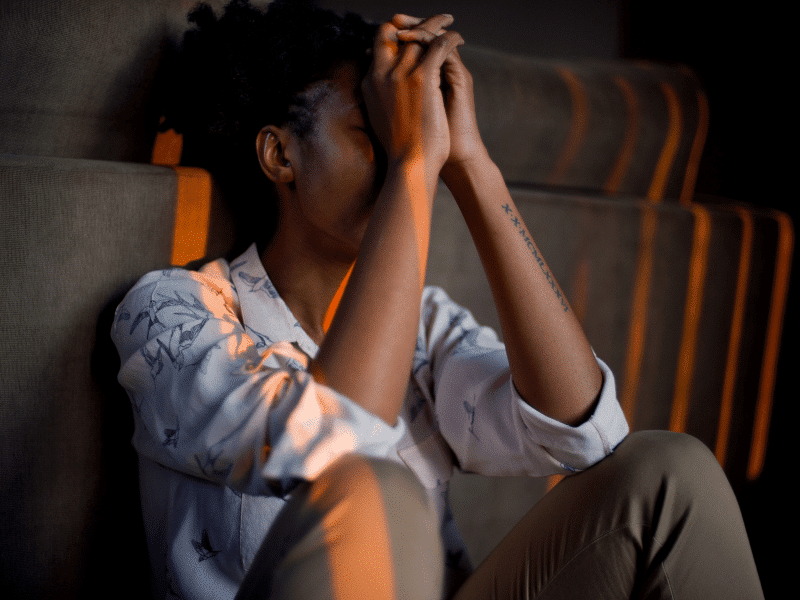
The field of gynecology has come a long way in the treatment and care of a variety of reproductive health concerns. The field is slowly catching up to addressing racial equity in the treatment room. Gynecology’s horrific origins of experimenting on the bodies of Black women is not far behind us, and it’s only in the past few years that the high Black maternal mortality rates has been seen as a public health issue.The medical profession is finally beginning to understand how racial bias can affect how white physicians perceive Black pain. So it’s not hard to imagine how lack of access and information about endometriosis care for Black Iowans is even further behind than our white counterparts.
The thing is, Iowa was on track to address the state of endometriosis care through the 2020 bi-partisan Endometriosis Caucus led by former Iowa Rep. Abby Finkenauer. However, Finkenauer is no longer in office and current legislators are proposing bills that limit bodily autonomy through abortion bans and increasing funding for deceptive crisis pregnancy centers.
What do those things have to do with endometriosis treatment? When politicians attempt to control our sexuality, gender, work, and reproduction, they negatively impact every aspect of reproductive health. It impacts how we receive care, our ability to afford care, and access to resources to make healthy decisions to treat ourselves and our families.
Further, when politicians penalize OB-GYNs and reproductive health specialists for taking a nuanced patient-centered approach to reproductive health through proposed abortion bans, they make Iowa an impossible place for future and current OB-GYNs to practice without worrying about their licenses.
The fix — Increase the availability and funding of specialized reproductive health care and decrease the amount of energy and funding devoted to attacks on bodily autonomy.
Endometriosis patients deserve more. Iowans deserve more.
Related Articles

Heart to Heart — Docuseries raises awareness about Black Iowans’ heart health
A docuseries about heart health will be shown at 6 p.m. Thursday, Feb. 20, at Grand View University’s Viking Theatre.
MercyOne partners with DART for Black History Month
MercyOne & DART launch a February campaign raising awareness of the Black maternal health crisis with resources

Advocates call on Iowa lawmakers to defeat ‘Cancer Gag Act’
Iowa has the second highest cancer rate in the country.