
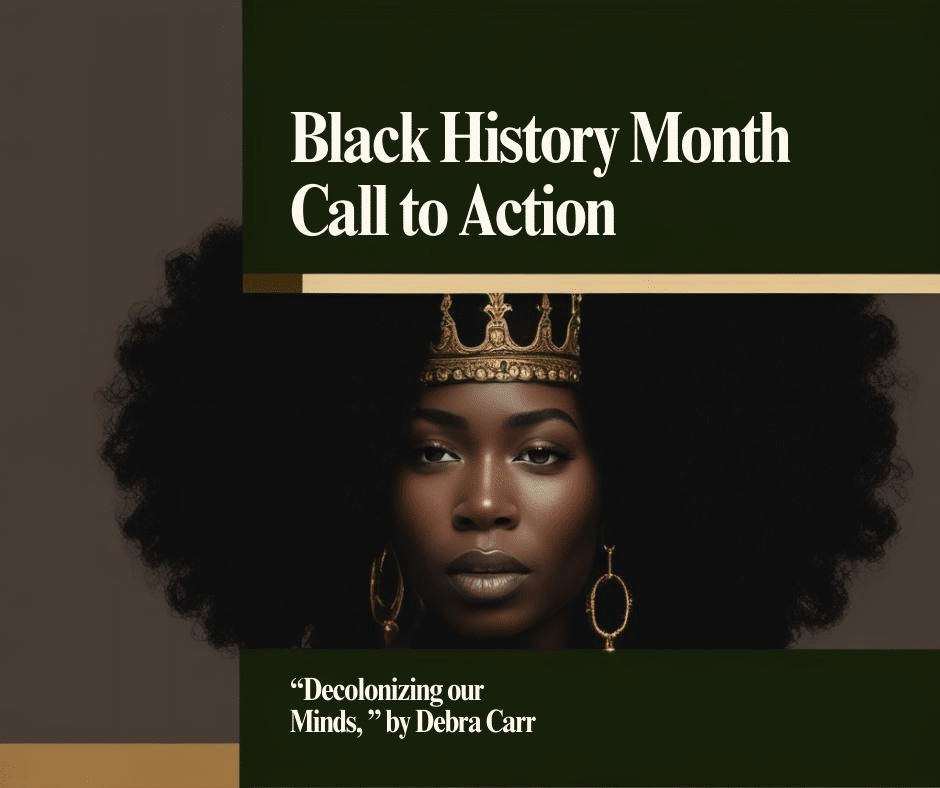
Decolonizing Our Minds: A Black History Month Call to Action
“As we reflect on Black History Month, let us remember that our history is not a threat, our dignity is not negotiable and our pursuit of justice will not be silenced.”
When I first heard about the president’s executive order and the swift withdrawal of corporate support for DEI (Diversity, Equity and Inclusion) initiatives, my initial reaction was one of anger and discontent. It felt like a direct assault on civil rights, an attempt to erase the progress that so many have fought for. The narrative being pushed — one that painted equity and inclusion as threats — was succeeding in sowing division and confusion. At first, I felt the very emotion these fear-based tactics were designed to provoke.
As I took a step back and challenged my initial reactions, I realized something critical: An executive order alone cannot dismantle civil rights.
True systemic change — whether for justice or injustice — requires more than a single stroke of a pen.
This executive order exposed the performative nature of many corporations claiming to value diversity, equity and inclusion. Their swift retreat revealed their commitment had been surface-level at best. Rather than dwelling in frustration, I knew that I and others had to take a different approach. We must remain vigilant, strategic, and purposeful in intentionally using the power we have.
According to recent estimates, Black Americans contribute approximately $1.7 trillion to the American economy through our purchasing power, with this projected to grow considerably. If we intentionally redirect our financial power towards businesses and institutions that genuinely uphold equity and justice, we will create tangible shifts. This is more than just reacting to discriminatory policies — it is about proactively building the world we demand to live in, one where life, liberty and the pursuit of happiness are afforded to all. Awareness, economic solidarity and strategic action are the tools that will allow us to resist the fear-based tactics that have sought to keep us divided for centuries. And yet, despite every attempt to silence us, we continue to stand resilient. We must leverage our resources in a way that will shift the trajectory.
The Power of Truth and the Threat to Control
America’s foundation is built on a history that has, for centuries, marginalized Black Americans through inequitable policies, laws and social constructs. The 3/5ths compromise, Jim Crow laws, redlining and mass incarceration were not accidental occurrences but deliberate measures designed to maintain power structures. These policies denied Black Americans full participation in democracy, access to wealth-building opportunities and educational advancement. Yet, when we seek to teach this history, it is met with resistance, labeled as “woke” or an attempt to make white people uncomfortable.
This fear of truth is not new. What is new is the speed at which corporations and institutions capitulate to the manufactured outrage over DEI. The same companies that once championed DEI initiatives not so long ago are now backtracking, afraid of the backlash from those who claim that equity is a threat to their existence. When did equity become a threat when it is the bare minimum required for a just society?
The Limits of Executive Orders and the Resilience of Civil Rights
An executive order does not change constitutional rights. Civil rights laws, including the Civil Rights Act of 1964 and the Voting Rights Act of 1965, cannot simply be overturned by a president’s pen. They require legislative action or Supreme Court rulings to be dismantled. Yet, we are witnessing the gradual erosion of these protections through judicial appointments, legal challenges, and systemic defunding of civil rights enforcement agencies. White plaintiffs are winning cases that challenge affirmative action and hiring practices and policies, not because they face discrimination but because the legal framework is being manipulated to redefine discrimination itself.
The Illusion of Reverse Discrimination
There has never been a time in American history when white people were denied their humanity. They have never been barred from citizenship, enslaved under the law, or denied access to education because of their skin color. The concept of “reverse racism” is a myth designed to create false equivalence between centuries of oppression and efforts to correct historical wrongs. Whiteness itself is a social construct created to uphold systems of privilege, and yet, the pushback against acknowledging this truth is fierce.
The Need for Safe Spaces
Black Americans have long understood the necessity of creating safe spaces — places where we can exist, thrive and uplift each other without the burden of explaining or justifying our existence. From Historically Black Colleges and Universities (HBCUs) to Black-owned businesses and cultural institutions, these spaces serve as vital refuges in a society that too often seeks to diminish us. The significance of celebrating Black identity, history and contributions is not about exclusion; it is about survival, healing and empowerment.
The Responsibility of Black Americans
As we navigate the fight for justice, those of us who have gained privilege — whether through education, economic success, or positions of influence — must be intentional in using our platforms to uplift others. We must hire and contract with Black professionals, ensuring that opportunities circulate within our communities. We must amplify the voices that are often left behind, advocating for those who have been systematically excluded.
We cannot allow ourselves to be disconnected from the struggles of our brothers and sisters simply because we have reached a certain level of success.
Decolonizing Our Minds: Reclaiming Our Power
To truly dismantle systemic oppression, we must begin with decolonizing our minds. This means:
- Relearning Our True History: Seeking out books, documentaries and academic works that present an accurate and full picture of Black history and contributions to civilization.
- Challenging Internalized Oppression: Recognizing and unlearning the ways in which we have been conditioned to see ourselves through a colonial lens.
- Practicing Economic Solidarity: Intentionally supporting Black businesses, entrepreneurs and institutions that prioritize equity.
- Reclaiming Our Cultural Identity: Embracing and celebrating our heritage without dilution or apology.
- Engaging in Political and Social Activism: Participating in advocacy efforts, supporting policies that uplift Black communities and holding leaders accountable.
Moving Beyond Performative Actions
It is time to move beyond symbolism and into action. Black Americans and allies must stand firm in the face of fear tactics, refusing to let corporations and institutions backslide on their commitments. This means:
- Demanding Accountability: Holding organizations to their DEI promises and calling out performative gestures.
- Educating and Advocating: Ensuring that true history is taught in schools and that misinformation is challenged.
- Strengthening Legal Protections: Supporting legislation and legal battles that reinforce civil rights and equity policies.
- Building and Investing in Our Communities: Supporting Black-owned businesses, institutions and political leaders who prioritize justice and equity.
- Speaking Truth to Power: Using our voices, platforms and votes to reject division and fear.
The Path to Liberation
True liberation means accessing everything the universe promises for humanity — without barriers, without fear and without compromise. It is not just about equality but about equity, ensuring that everyone has what they need to thrive. As we reflect on Black History Month, let us remember that our history is not a threat, our dignity is not negotiable and our pursuit of justice will not be silenced.
Inquiring minds want to know: What will it take for America to acknowledge the truth and embrace unity? The answer lies in our collective action, our refusal to be divided and our unwavering commitment to justice.

Photo Credit: Made using AI.
Author

Related Articles

The Importance of James Baldwin
One does not read Baldwin to escape, but to be awakened — just what 16-year-old Shade Burgs would discover.

Grab the latest edition of the Black Iowa Newspaper
The Black Iowa Newspaper was established in 2023 by Dana James, founder and publisher. Monthly editions are delivered statewide.