
Bank of America Student Leader Nanees Abakar

Two Des Moines seniors, Nanees Abakar from Roosevelt High School and Frise Mukina from North High School, participated in the Bank of America’s Student Leaders internship program last summer at Big Brothers Big Sisters of Central Iowa.
Nanees is involved in several organizations, including the City of Des Moines Youth Advisory Board and Iowa Youth Congress. She also serves as her school’s Speech and Debate captain and National Honor Society president.
Frise was born in the Democratic Republic of Congo and moved to the U.S. in 2015. She is involved in several organizations, including Simpson College Upward Bound, the Black Student Union and the Youth Leadership Initiative.
The Student Leaders program, celebrating 20 years, connects more than 300 community-minded high school juniors and seniors from nearly 100 communities to employment, skills development and service. In addition to the eight-week paid internship, the students received financial education. They participated in a national leadership summit in Washington, D.C., to see how nonprofits, governments and businesses collaborate to meet local needs.
Since the program’s launch in Iowa in 2019, 10 Iowa students have participated in the program at local nonprofits like Urban Dreams and Big Brothers Big Sisters of Central Iowa.
Black Iowa News Intern Melayna Brown developed questions to ask the interns:
Nanees Abakar
- What did you like most about your internship? My hidden passion is journalism. I am a very detail-oriented person, so I loved designing posters and flyers for Big Brothers Big Sisters. I also love videography, so I enjoyed recording and editing video colleges for Big Brothers Big Sisters’ social media. A 40-second video collage of the Bigs and Littles at the Art Center took me three hours to edit. I get lost in video editing because I find the storytelling aspect of journalism so powerful, and I am so grateful that Big Brothers Big Sisters gave me an outlet to do this. I find the relationship the Littles have with the Bigs so beautiful, and I feel so honored that I got to share the story of the power of mentorship during my time interning with Big Brothers Big Sisters.
- What advice would you give to other students applying for an internship? Be passionate and involved in your community. I think oftentimes we see these super impressive people on social media starting non-profits and making groundbreaking scientific discoveries, and then we start comparing ourselves. However, you don’t necessarily need to do something like discovering the cure for cancer at 17 in order to make an impact on your community. When I asked the Bank of America Student Leaders admission officer for my market why they selected me, they said they found it interesting how I volunteer at a Christian church as a Muslim. Contributing to the betterment of your community looks different for everyone. So, if you are passionate about making people feel safe at school, home in on that! If you enjoy volunteering, focus on increasing the impact and scale of your service. If you care about youth issues, join your city’s advisory board. If you want the world to share your passion for Rubik’s cubes, start a Rubik’s club and foster a sense of community for others. Also, make sure you start early and take your time in writing your responses to the Bank of America Student Leaders application. Don’t judge your first writing drafts! Effective writing responses come from time, effort, and continued revision. Have your teachers, friends, parents, cat, and counselors look over your responses, and have confidence in yourself. You got this!
- What does being a student leader mean to you? Being a student leader means that I am part of a network that serves, inspires, and changes their community. It is my aspiration in life to contribute to the betterment of society, and I am genuinely so grateful that the Bank of America Student Leaders program has exposed me to a network of people who share my aspirations. All the Bank of America Student Leaders that I met from across the nation at the summit in D.C. make me feel inspired, optimistic and excited about the future.
- What is a struggle all students have to go through, and how did you overcome it? Whether it’s a voice in their ear telling them that they aren’t going to do well on a test or someone telling them their goals are unrealistic, all students experience some form of doubt. I think students should incorporate some form of strategic-optimism into their lives. “Strategic-optimism” is a philosophy I coined that means anything can be achieved when situations are approached with optimism and limitations are acknowledged. If you have blind optimism or hope without proactiveness, your goals are just a wish. Contrastingly, if you are very pessimistic or cynical about the future, then your goals will feel unattainable. Strategic-optimism is a nice balance between the two. When you experience doubt, consider the limitations of your current circumstances. Then, be proactive and think about ways to address the barriers you may encounter. Maintaining a growth-mindset will not only benefit you academically, but utilizing strategic-optimism will benefit you at work, in your relationships and in achieving your goals.
- What are the main things students need to be successful in school, whether it be an object or a trait? All students need a mentor, tenacity and the willingness to try in order to be successful in school. Everyone is still discovering themselves in high school. A mentor can help keep students stay grounded during challenging experiences and remind them that high school is just that, high school. There are many different types of mentors (ex: religious, academic, career, social). Students should find mentors that fulfill their needs. Maintaining tenacity is important because throughout high school students will experience many challenges (like AP chem and AP bio). On a serious note, failure is inevitable. Students must have the ability to consistently learn and pivot from their mistakes in order to shape their resilience and adaptability. Lastly, the willingness to try is a more powerful trait than innate knowledge. Students need to have the willingness to learn and step out of their comfort zone. This may look like raising their hand in class, staying after class to ask questions and talking to new people! It is temperament that shapes success in school. Students will not always have perfect teachers who can cater to their learning style; however, they must remember that they are responsible for their own learning and be proactive!
Author

Related Articles
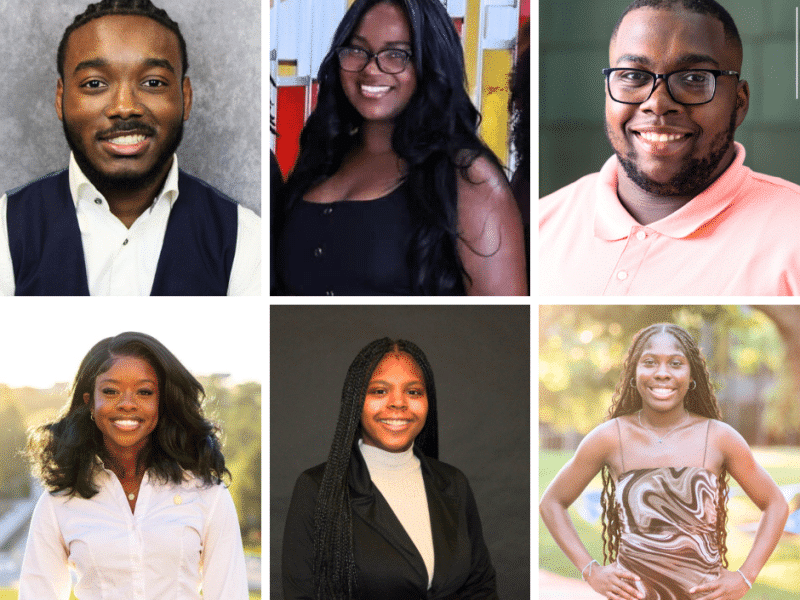
Leading through adversity: Black student leaders build community, strengthen Black student unions across Iowa universities
Black Student Unions are safe and welcoming spaces for Black students at 4 Iowa universities, say student leaders.
Federal Court Sets New Trial Date for Ian Roberts’ Immigration Case
The former Des Moines Schools superintendent Ian Roberts will head to trial early next year.

In the Quad Cities? Partner with an Augustana College accelerator program
Have a pressing community issue in the Quad Cities? An accelerator program could help solve it.