
Black leaders discuss joys of fatherhood, saving Black youth from criminal justice system during REFORM Alliance’s barbershop forum
REFORM Alliance and a coalition to improve Iowa’s probation system held a barbershop forum in Des Moines 🎥Watch the intervew.
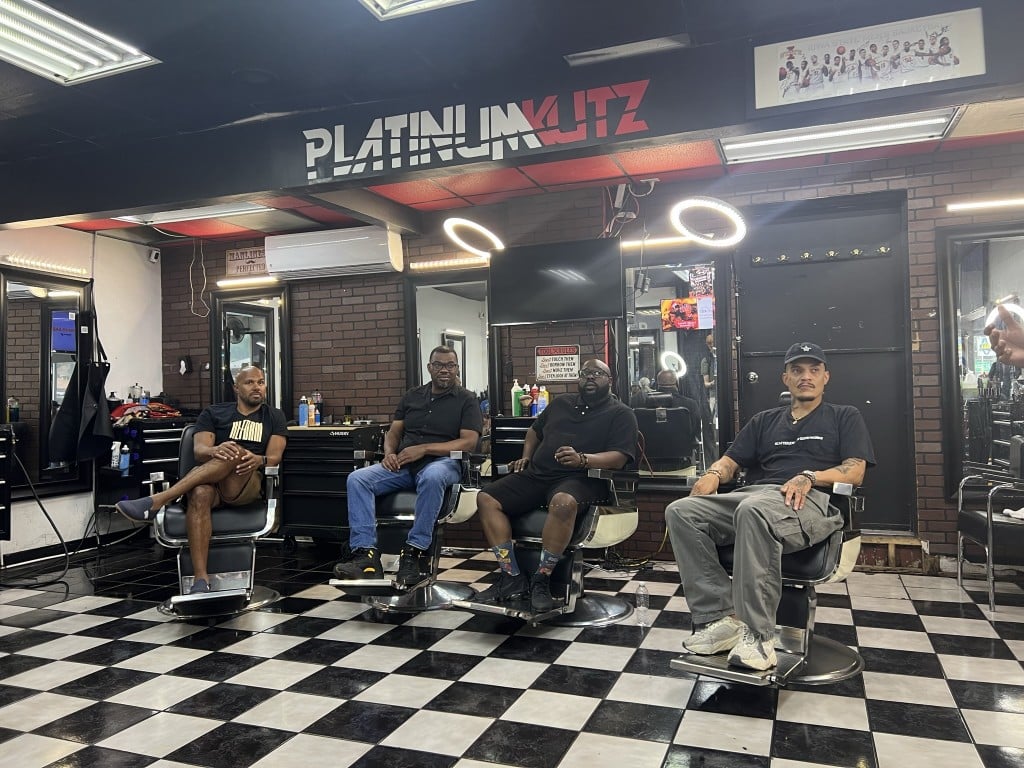
Black men — a state senator, a national criminal justice reformer, a reverend and community activist and a renowned artist — spoke candidly on a panel this week at Platinum Kutz Barbershop in Des Moines about how people and communities factor into efforts to reform the state’s probation system.
REFORM Alliance, which is a national criminal justice group working in Iowa, organized the event with a coalition. REFORM isn’t an organization that’s “flying in and out,” of Iowa, said Robert Rooks, its CEO. He said the group is here to stay in the state as part of a national narrative to fix a broken system that should be helping people re-enter communities successfully but is instead a “trapdoor.”
The panel discussion was part of REFORM’s work with the Iowans for United Opportunity coalition to discuss safety and community needs. Sitting in barber chairs, Rooks moderated the panel, which included Sen. Izaah Knox, Rev. Rob Johnson and artist Robert Moore. The leaders shared intimate details of their lives as Black men, fathers and leaders. They discussed their youthful mistakes, too.
All of the leaders agreed they are dedicated to improving Iowa’s communities and making sure Black youth know the community cares about them.
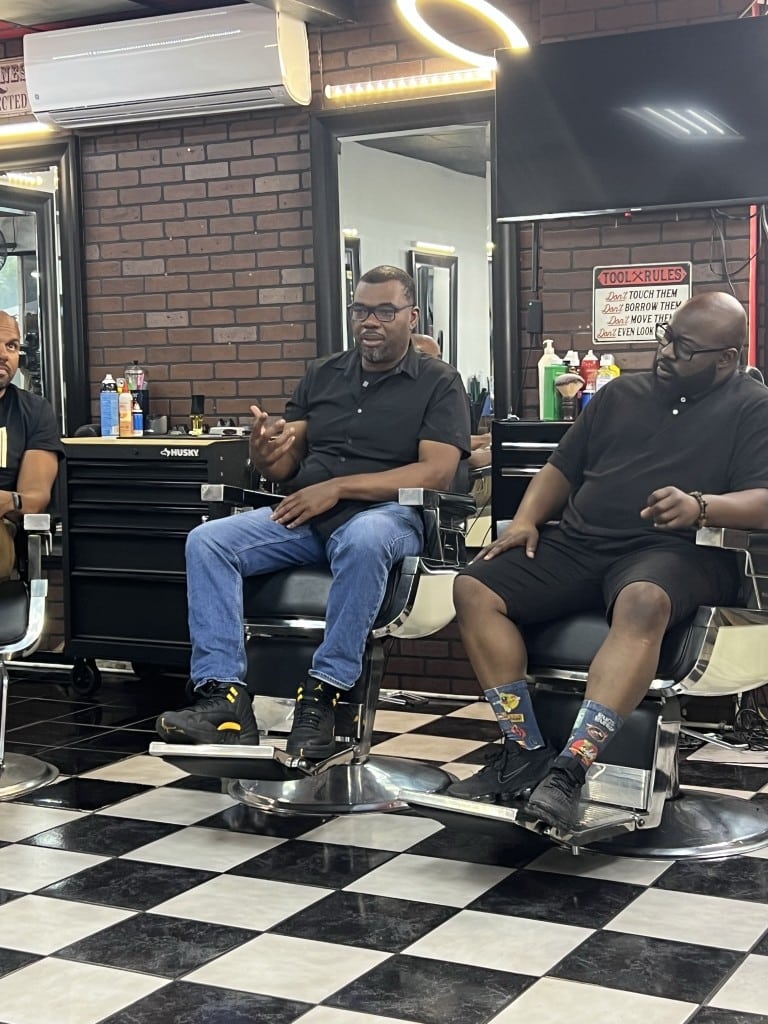
“I’m a firm believer that our pathway as a people to our freedom is through conversations like this,” Rooks said, of the forum.
Rooks, who has worked in justice reform for 25 years, told the audience the vast numbers of people in the U.S. affected by probation and parole face a number of barriers. REFORM and its partners worked on HF 349, which passed the Iowa House but has not yet passed in the Senate. The bill would provide incentives for Iowans on probation to pursue full-time employment, education and vocational certification. Rooks said organizers plan to press for its passage in 2024. Nationally, REFORM has passed 16 bills in 10 states, held job fairs, launched grant-making programs and more, he said.
More than a dozen people attended the forum on July 10, which included Rooks and members of Iowans United for Opportunity, which includes Urban Dreams, Urban Experience and Big Brothers Big Sisters of Central Iowa, according to a press release.
“That’s the number one thing — we have to reduce the barriers for people,” said Knox, the state’s 2nd Black senator, who is executive director of Urban Dreams.
During a question-and-answer session, the panel discussed how probation and parole affect communities and their efforts to change the narrative about African-Americans, which is “negative and derogatory,” said Kameron Middlebrooks, the Iowa state director for REFORM. The panel discussed several topics, including how personal storytelling can be used to reframe the issues.
“I paint, but my paintbrush is like a microphone,” said Moore, known as B. Moore, who uses his platform to inspire youth and uplift people in the margins. “My paintbrush is also like a pen.”
Rooks said the problems with the justice system are expansive and also affect rural communities.
“It’s harmful for everyone,” he said. “It’s reaching every community.”
Robert Presswood, the barbershop owner, said he noticed a pattern with teens in his hometown of Fort Dodge who seem to drift in and out of the criminal justice system until a tragedy occurs. The city has experienced the shooting deaths of at least four teens this year.
“When you’re fighting against a system that’s promoting it,” he said. ”Like, they want it to happen.”
Rooks said people need to view themselves as advocates who are central to interrupting the “trajectory” of what’s happening in their communities and center rehabilitation.
“We need to compete for these kids’ lives,” he said.
Jay Hall, of Big Brothers Big Sisters of Central Iowa, said, from the audience: “It’s not only the system. We have to get to our kids before they get to that point.”

During the discussion, the men said they’re having conversations with Black teens whenever they can, and they’re actively working in a variety of ways to help teens to make better decisions in their friendships and how to handle conflict. They also discussed how important it is to treat youth with dignity and respect and to listen.
“Even if people don’t see it,” the Black leaders said, they are working with teens one conversation at a time. Like the teen who came into Presswood’s barbershop the other day.
“Kid come in. Saggin’. Tight draws,” Presswood said. “Got his banger in his draws. I said listen. I pulled him to the side, and I said: ‘What are you doing? I said, ‘Why are you walking around like that? Do you know you’re a target?’”
The teen told Presswood, whose clientele includes police officers, teachers, and judges, he’d been shot “like 10 times.”
“So when he told me that, I had to change it up because I can’t stop him from not protecting himself,” he said. “But I had to talk to him, let him know that — what you’re presenting, that’s what you’re going to attract.”
Presswood said his shop’s location in the heart of Des Moines has many times put him in between rivalries, which he was often able to help end peacefully. He told the teen in his shop he has the power to choose.
“If you come to them like a brother, with love and understanding, and ask them why, what are you going to get out of that? Then the conversation changes. The mood, the anger comes down a notch, and now you can talk.”
Johnson said Black boys are four times more likely to take their own lives and they face other educational disparities. He said Black boys need love, attention and someone to relate to them.
“Let’s look out for our Black boys’ mental health,” he said. “So that even if they do end up in a situation where they need reform, we have at least started that opportunity for them to be heard, for them to be seen, for them to (feel) like somebody actually cares.”
An audience member said most reform efforts were on “life support,” but this was the first time he felt encouraged by the work occurring.
Robert Rooks, REFORM Alliance’s CEO, discusses the group’s work in Iowa
Author
Related Articles
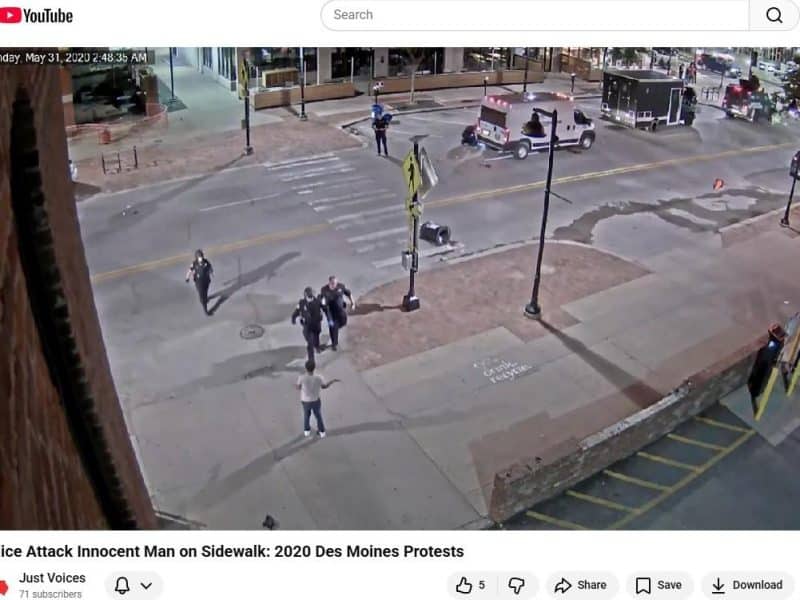
Profile of Des Moines police violence in aftermath of 2020 George Floyd protests
Officers caught on camera: Just Voices dives into video of Des Moines police officers assaulting a pedestrian on May 31, 2020 – a week after George Floyd’s murder.
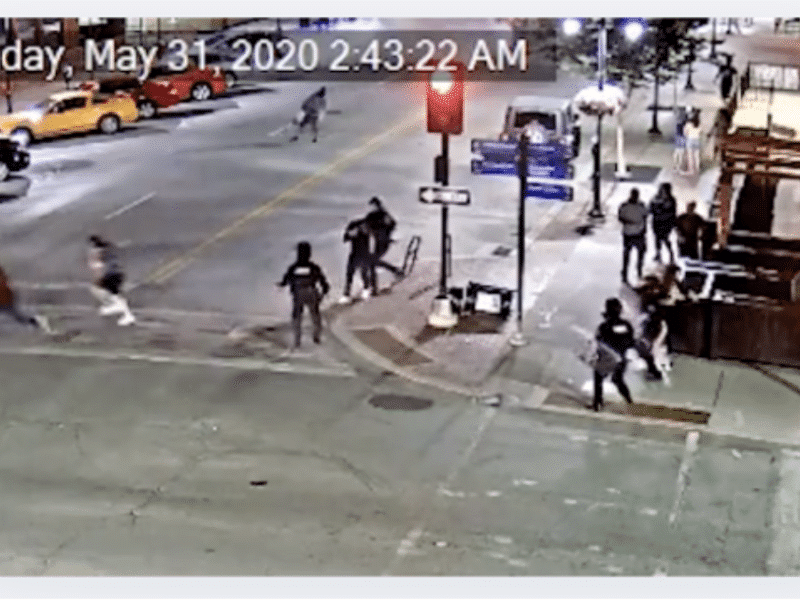
The Silence After the Sirens: What a Security Camera Revealed at 3rd & Court
A nonprofit dissected a surveillance video from the 2020 George Floyd protests, revealing allegedly undocumented use-of-force incidents by the DMPD.

‘Three Strikes’: New Iowa law enforced beginning on July 1
A new ‘3 Strikes’ law in Iowa will result in the disproportionate incarceration of Black Iowans and lead to new prison construction, officials have projected.