
This is absolutely, positively not about Langston Hughes
Who knew that words could both pirouette gracefully and land with the impact of a nuclear weapon without having to be dressed in the cumbersome attire of academia?
Langston Hughes said:
“The kind of anecdotes that amuse Black Americans are white Americans who espouse freedom, justice and democracy internationally but will force Black Americans to purchase a soda through a hole they cut in the side of a building.”

Langston Hughes cracked the code on bridging classical poetry with the rhythmic beat of Black American life. Poetry before him wasn’t quite hitting the mark for Black folks. Who knew that the whole time, all American poetry needed was a little jazz and jive to resonate? Langston Hughes did, that’s who. His merging of classical European forms with the rich oral traditions of Africa, conducted in the language of the streets and the profound sorrow and joy of Negro spirituals and blues, created a symphony that even the common man could easily follow. It was a revolutionary concept befitting the times of the Harlem Renaissance.
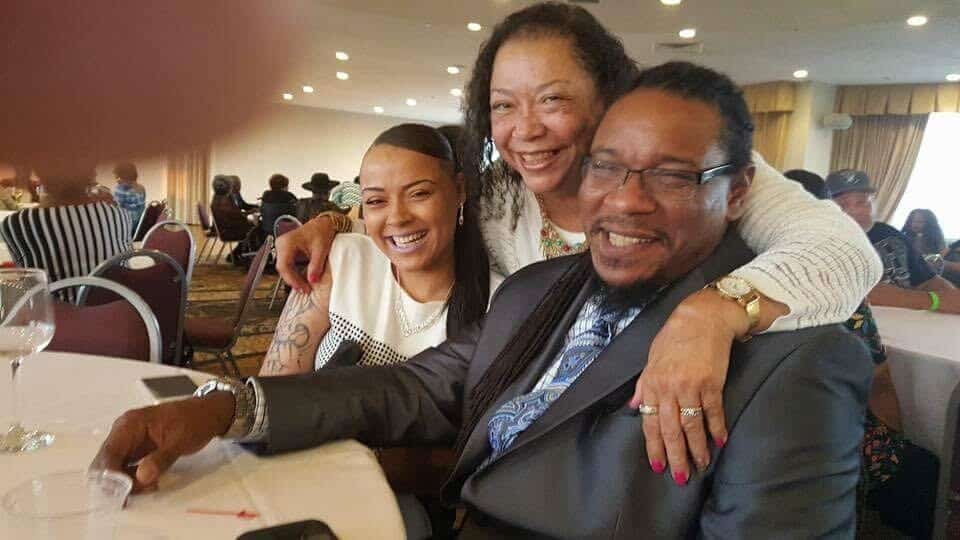
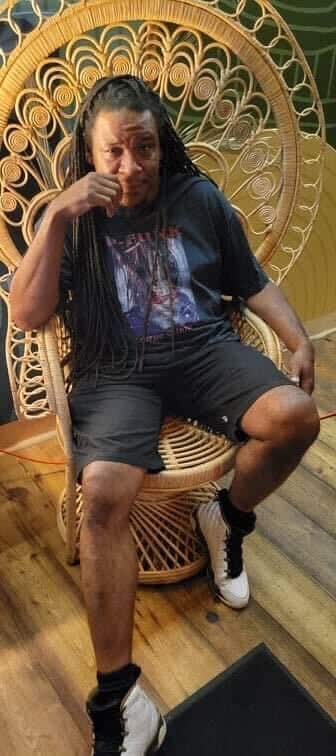
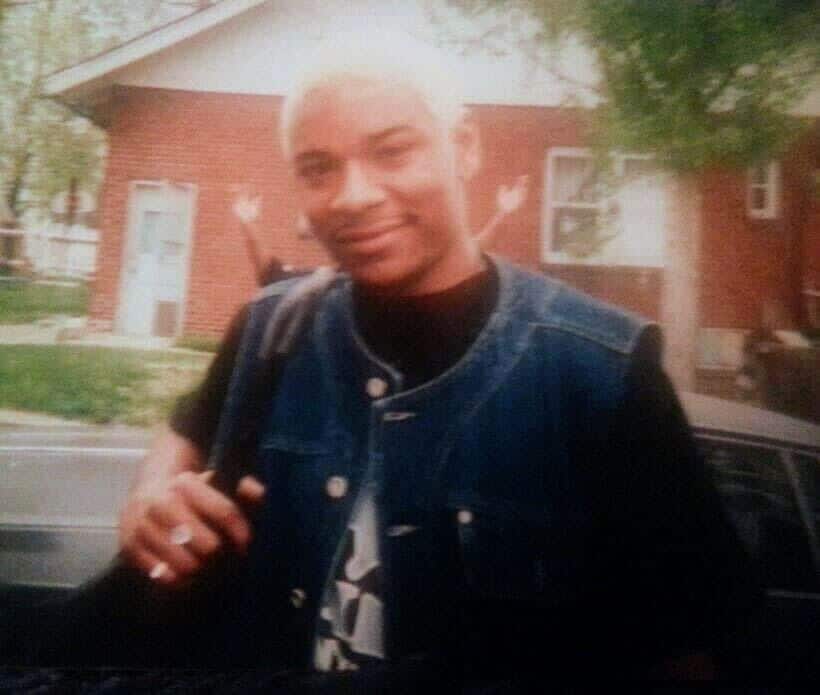
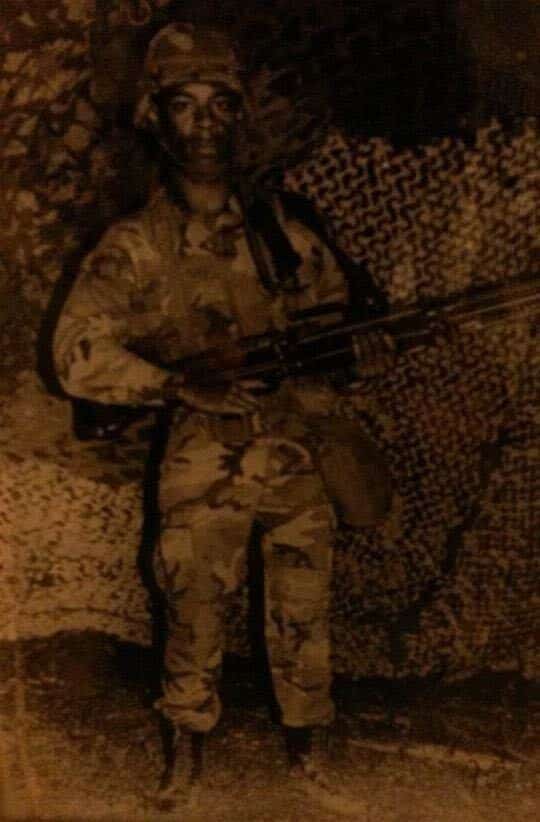
Top: Black Iowa News Columnist Shade Burgs, Burgs’ daughter, Ashlee, mother, Audrey Burgs, Black Iowa News editor, Burgs chillin’, Burgs in his youth, Burgs in the military. Photos courtesy of Shade Burgs.
Born to mixed-race parents in Joplin, Missouri, during the not so poetically inspiring year of 1902, Hughes was apparently appropriately typecast as the class poet in grade school. He penned ‘A Negro Speaks of Rivers’ at 17, in 15 minutes during a train ride to visit his father in Mexico after tossing his high school graduation cap. The poem was nothing short of a baptism into the world of published poetry, marking the start of a gloriously unpredictable journey.
In a twist of irony, Hughes landed on an arrangement with his father that he would attend Columbia University on the pretext of becoming a mining engineer. Classic father-son compromise because when you think about it, mining the depths of the human soul and engineering verses that sing of the Black experience are practically the same thing, but I’m pretty sure that’s absolutely not what his father was thinking at the time. Unsurprisingly, Hughes ditched the engineering facade faster than he could drop a metaphor, embracing his true calling as a writer, though not without encountering the racist gatekeepers of the college newspaper.
Rejecting the hallowed halls of Columbia because of said racism, and with a princely sum of $13 to his name, Hughes strutted into Harlem, the beating heart of the Black American cultural renaissance. There, he was quite the head-turner. He was tall, fair-skinned with boyish charm, and wavy hair, quiet yet always with a smile, he was surely the very model of the brooding, yet irresistible poet.
His private life remained just that, private. Whispers alluded to him being a member of the then-clandestine LGBTQ community. But then again, what do whispers know? In any case, Hughes’ legacy isn’t tethered to whom he loved but rather how he loved through his words, his defiant spirit and his undying commitment to weaving the Black experience into the tapestry of American literature and making it a permanent part of American culture. Truly, a renaissance man if there ever was one, armed with nothing but a pen, a vision, and perhaps, just a hint of sarcasm.
My mother’s aversion to rap during its genesis in the early 80s was basically the universe conspiring to introduce me to Langston, after she casually dismissed the entire genre with a wave of her hand and an eye-roll, claiming, “That ain’t nothing new, people have been doing that since forever.” Naturally, as a 12-year-old, I was the encyclopedia of all musical knowledge. So when she effortlessly spat out Langston Hughes’ “Motto” with more rhythm than Grand Master Melly Mel:
“I play it cool and dig all jive That’s the reason I stay alive. My motto, As I live and learn, is: Dig And Be Dug In Return.”
I was destroyed. Here I was, thinking I was the maestro of music, yet there was my mom, killing me with straight BARS. All I could muster was a lame, “When did you learn how to rap, Mom?” To which she nonchalantly replied, “That was a poem by Langston Hughes.” And just like that, my mom was cooler than me, again, and I was introduced to a poet who would influence my way of thinking for the rest of my life.
Langston’s brilliance really came down to this wild concept of communicating in a way that didn’t require a thesaurus on hand to grasp. His magic was wrapping complexity in simplicity, something I, with my vast and often ridiculously overwhelmingly large linguistic lexicon, struggled to appreciate at first. He somehow managed to make every reader feel like he was speaking directly to them about a memory only they shared, which is no small feat. This inspired me to tone down my obnoxiously expansive vocabulary in favor of clarity. Who knew that words could both pirouette gracefully and land with the impact of a nuclear weapon without having to be dressed in the cumbersome attire of academia? Langston taught me the art of making words dance without making readers scramble for a dictionary. Simply revolutionary.
In “Motto,” Hughes kicks things off with a line that’s just dripping with authenticity: “I play it cool and dig all jive, That’s the reason I stay alive.”
A cryptic dart likely aimed at the duality of his own existence. It’s almost like he’s saying, “Hey, America, I don’t fit into your neat little boxes, and I’m OK with that.” Because, you know, as a Black man navigating the convoluted expectations of a Jim Crow nation, And the added layer of being a closeted Black man, he just had to be a chameleon. Back then, being true to yourself could get you a one-way ticket to jail or a lifetime membership to society’s outcast club. Meanwhile, James Baldwin was flaunting his truth like a badge of honor, but Hughes? Well, he kept it to himself for his own reasons. The tension between these literary giants was almost sitcom-worthy, with one critiquing the other often enough that some genuine dislike arose between the two. Baldwin was more geared toward tackling the gritty realities of Harlem, while Hughes preferred to focus on the more beautiful aspects of his borough. Who needs straightforward narratives when you can have the ambiguity of a spectrum?
That first line of “Motto” really got to me. Because, at the time, I was deeply entrenched in my own personal sitcom titled: “The Weird Black Kid.”
The premise was a 12-13-year-old me merging the ‘who I am’ with the ‘what I am,’ while simultaneously trying to fit in with my peers, which seemed about as likely as me sprouting wings and flying. I spoke articulately and read well above my grade level which made navigating the minefield of “You don’t act Black” comments from all sides my full-time job. Of course, only one group had the insider knowledge of how deeply those words pierced, and how sharp that blade was. Good times, truly. Ok, so not really.
In “A Negro Speaks of Rivers,” Hughes speaks on experiences he hasn’t even had a whiff of, but feels in his soul. My friends, this is exactly the rabbit hole your mind joyously tumbles down when you start pondering your profound connection to literally every atom that has danced across the cosmos from the dawn of time, is awkwardly shuffling around now, or will leap into existence in the future. It’s all about the bewildering jigsaw that is our DNA, the epic saga of our forebears, the uncertain destiny of our descendants, and how your specifically significant spot in the infinite of everything is, as we speak, seeping into the cosmos around us. Our experiences, you see, aren’t just a solo act. they’re a full-blown, intergenerational ensemble where everyone who has ever taken a breath before us and anyone who dares to do so after, in some unfathomably tiny way, chips in to the grand tapestry of the Black experience.
To explain, as an adult in my early 30s, I went to the Grand Canyon for reasons that now seem a bit more questionable than they did at the time. The nice young lady I was with sat with me on a blanket in the pitch black of night, clearly enjoying the ambiance of our questionable life choices. We drank a bottle or two of Coppola Claret (it was definitely two; who’s counting) and talked a bit about ourselves and our adventure.
I had no real idea of what time it was, but it was a cool night, breezy and about 75-80 degrees out, perfect weather for some chemically induced existential exploration with a friend. As we looked up into the night sky, we were both amazed at how many stars we could actually see clearly with the naked eye, which I’m sure only added to the ambiance of our questionable bottle choices. I’m not sure if it was because of partaking in an enlightening purchase I made in Denver on the way to this little spot In Arizona, or if it was just always like this, but at that moment, I was suddenly contemplating how physically small I was in comparison to the size of the galaxy, and then the universe, because obviously, a little wine amongst the stars can make you ponder your place in the cosmos, right? This profound epiphany rushed into my head. My laughter stopped, I stood up, took a sip from my glass and in a weirdly serious voice I recited:
“I’ve known rivers ancient as the world and older than the flow of human blood in human veins.
My soul has grown deep like the rivers.
“I bathed in the Euphrates when dawns were young.
I built my hut near the Congo and it lulled me to sleep.
I looked upon the Nile and raised the pyramids above it.
I heard the singing of the Mississippi when Abe Lincoln went down to New Orleans, and I’ve seen its muddy bosom turn all golden in the sunset.
I’ve known rivers:
Ancient, dusky rivers.
My soul has grown deep like the rivers.”
I felt an immediate connection to the “All and the Is.” At one with the universe and nature. Connected to every other thing that existed, has existed or will exist. I felt the immediate smallness of self, yet the extreme importance of being in this moment and living it, right here, right now. My thoughts were abruptly interrupted by my friend’s voice saying:
“Wow that was amazing, did you just make that up?”
I said I didn’t write it, it’s a poem by Langston Hughes to which she replied:
“Who is Langston Hughes?”
Author

Related Articles
OPINION: The Problem With Black Women
The headline may make you uncomfortable. It should. Sometimes the best way to expose a myth is to state it plainly, then dismantle it piece by piece.
Passing the Baton: Who will document the Black experience in Iowa for the next 250 years?
The Black Press has long documented the lived experiences of Black Iowans. Sustaining it into the future will require more.
Profile of Des Moines police violence in aftermath of 2020 George Floyd protests
Officers caught on camera: Just Voices dives into video of Des Moines police officers assaulting a pedestrian on May 31, 2020 – a week after George Floyd’s murder.